Austria
We had 10 days of vacation to spare, a couple of months left on our Schengen Visa, the month was July and we needed a destination small enough to do justice in the given time frame. Austria picked itself. It is located so far east that we could fly there from India and have enough daylight left on the first day to accomplish something meaningful. And that accomplishment was visiting the twin museums that encloses the Maria Theresa Plaza, named after the famous Hapsburg ruler. Both the museums, the Kunsthistorisches and the Naturhistorisches, flaunts a monumental staircase and an Instagram perfect coffee shop. In addition, the former houses art from the ancient world and paintings from the European Masters while the latter houses the famous Venus of Willendorf, a tiny statue that dates back an astonishing 30,000 years.
Vienna was the capital of the mighty Hapsburg Empire. So, it is no surprise that it houses not one, but three sumptuous royal residences. We started our second day at one of these, the Belvedere Palace Complex, built in the early 18th century by the Prince Eugene of Savoy, the feldmarschall who was instrumental in defeating the Ottomans. The Upper Palace houses the famous Kiss by Klimt, a gleaming Marble Hall and the enigmatic Character Heads by Messerschmidt while the Lower Palace houses four grand state rooms which are worth the extra cost and the effort to get there. We ended our day at the next palace, the Hofburg Palace Complex whose genesis dates back to the 13th century and has been the primary residence of the Hofburg Royalty. Among the plethora of buildings we visited the Kaiserapartments, the Royal Treasury and the stunning library. In between the two palace jaunts, we also visited the most important religious building in Vienna, St. Stephen's Cathedral. After marvelling at its Gothic interior, we climbed its bell tower, the tallest in the country, for a breathtaking view over the city.
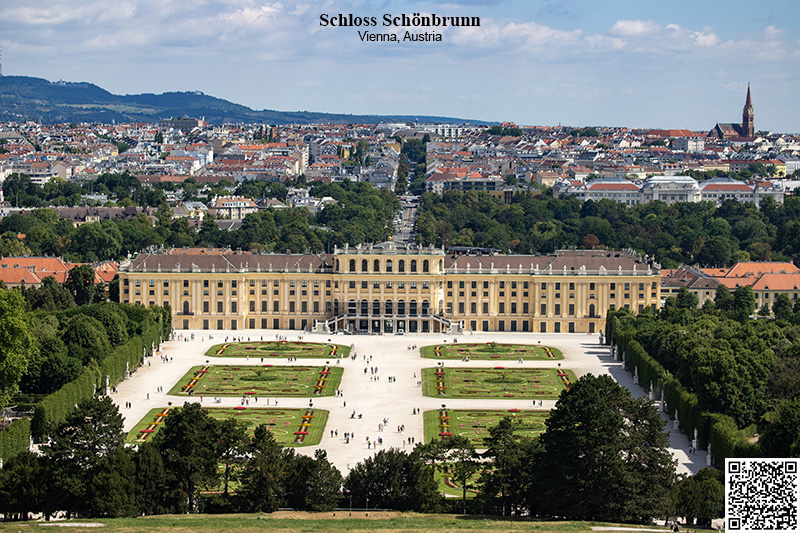
We started the third day at the third and the most impressive of the Viennese palaces, the Schönbrunn. This was the summer residence of the Hapsburg Royalty since the time of Maria Theresa. It was she who built most of the Baroque magnificence that you see today. The 44 of the 1441 rooms open to the public, especially its Great Gallery, is sure to impress the most jaded of palace hoppers. Schönbrunn kept us occupied till noon, and in the afternoon we headed to the Klosterneuburg Abbey, a monastery founded by Saint Leopold III, the patron saint of Austria. The monastery houses a fine Baroque church dating from the 18th century.
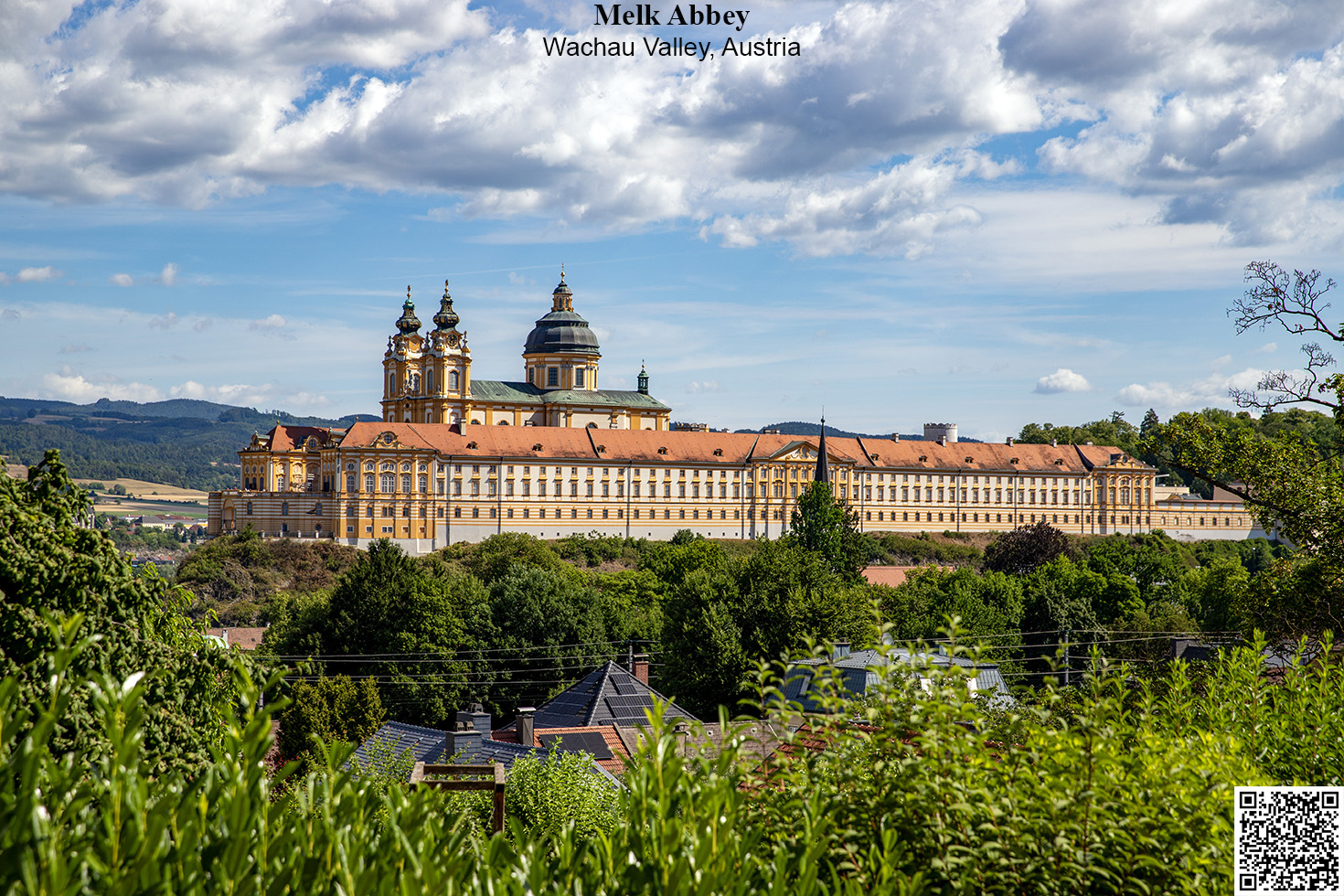
So far, we have been commuting using the web of public transport options in Vienna. It was now time to become more independent. We hired a car the first thing on day four and headed to the top day trip destination from Vienna, the Wachau valley. Carved by the mighty Danube and lying between the town of Melk and Krems, this is the prime wine region of the country. Being teetotallers, our main interests were the top two historic sites, the towns of Melk and Dürnstein. The former houses the finest Baroque building complex in all of Europe, the Melk Abbey. This imposing structure started off as a castle which was later converted to a Benedictine monastery. The monastery has a fine library, a grand Marble Hall and grander church which were all prohibited from being photographed. Dürnstein, at the other end of the valley, houses a ruined castle which wouldn't be worth a second look if not for the fact that it once hosted Richard, the Lionheart. Not as a guest, but as a prisoner. The local Austrian Duke, Leopold V, imprisoned him and ransomed him off for a hefty sum. Dürnstein also houses a lovely little abbey. The pastel blue church overlooking the Danube is the perfect place to watch the river flow by.
We had one more appointment to fulfill before our night stop, the 3 pm tour at the Stift Sankt Florian. The tour was in rapid-fire German. That's not a problem. A library like this, a Marble Hall like this and a church like this need no accompanying explanations. When you are in the midst of some of the greatest flourishes of human creativity, you realise that art transcends all language barriers.
Our destination for the day was Linz which was more of a convenient stop before continuing our drive westwards. While we were there, why not dekko into the largest cathedral in the country and dive into the city's famous Linzertorte? We did just that. Check out our video below for details.
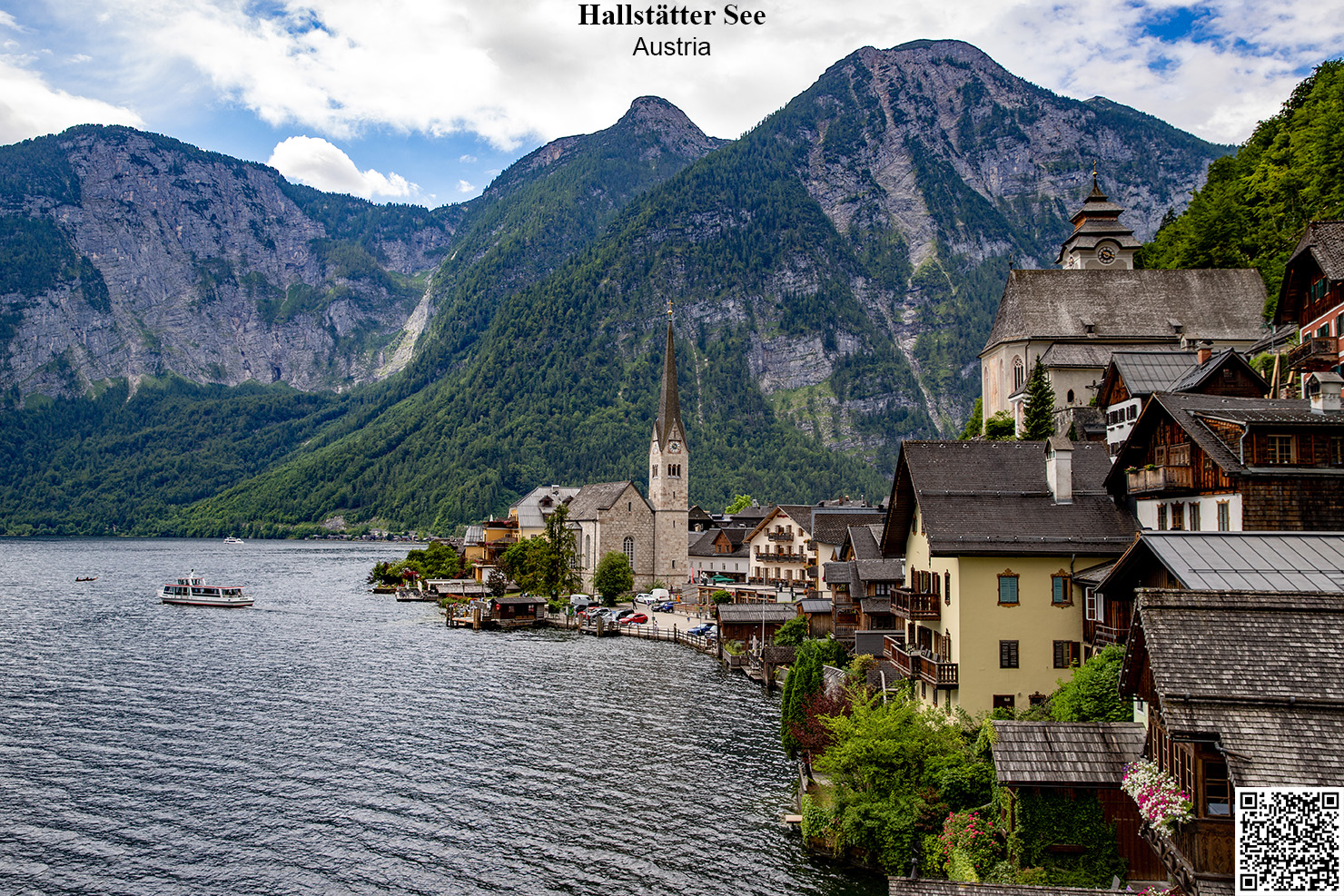
It was now time to give abbeys and cathedrals a break and head into nature. Southeast of Linz are two of the more famous lakes in the country. First up was Traunsee, the largest and deepest lake in the country. Well, Lake Constance is deeper and larger, but most of that lies beyond within the Swiss and German border. Its name translates to Dream Lake in German and it truly looked like it was plucked right out a wonderful dream. We were there by 7 am and we were the only tourists around. Everyone else was a local taking their morning walk. An hour south of Traunsee lies the most famous lake in the country, the Hallstätter See. 'See' is German for 'lake' and 'Mer' is German for 'sea'. We reached here by 9 am and that gave us an opportunity to grab one of the last few spots in the car park. The town was packed to the rafters, but an advantage of a waterside town is that once you elbow your way to the front, there is no one to photo-bomb your view.
By noon, having checked out all the viewpoints, we drove to Dachstein which is name of a rugged mountain range and a glacier. We aren't adventurous enough to visit either. Few tourist friendly activities do exist in the general vicinity and we picked the most popular. A series of cable cars whisk you up to 2000 m and a half hour walk brings you to a viewing platform. Aptly named as Five Fingers, these are five steel platforms that jut over a precipice offering a bird's eye view of the surrounding mountains. The weather was at its worst and we had to battle a hefty headwind while we made our way to and back from the platform. On the plus side, it kept everyone else away and we had the platforms all to ourselves, a rareity during shoulder season, let alone peak!
Nearby the lakes is the town of Bad Ischl. There is nothing bad about the town. 'Bad' is just German for 'bath' ('schlecht' is German for 'bad'). As the name suggests, it is an old spa town. In the mid-19th century, Austria was ruled by the sickly Ferdinand I. His sister-in-law, Sophie, hatched a plan to sideline him and his brother (i.e. her husband) and brought in her son, Franz-Josef as the new ruler. The following year, she invited her niece to become the new queen. Everything was going according to the plan. The bride-to-be niece was accompanied by her younger sister, the bubbly, less sophisticated Sisi. Franz Josef was swept away by the younger sibling, stood his ground and married Sisi against the wishes of his mother. This Bollywood level plot twist happened here in Bad Ischl and thanks to the fond memories of the place, Franz Josef made the town his summer residence. His Kaiservilla is now open to public and it was here that he signed the fateful declaration of war in June 1918 that heralded the First World War. An hour more on the road brought us to land of the Sound of Music, Salzburg.
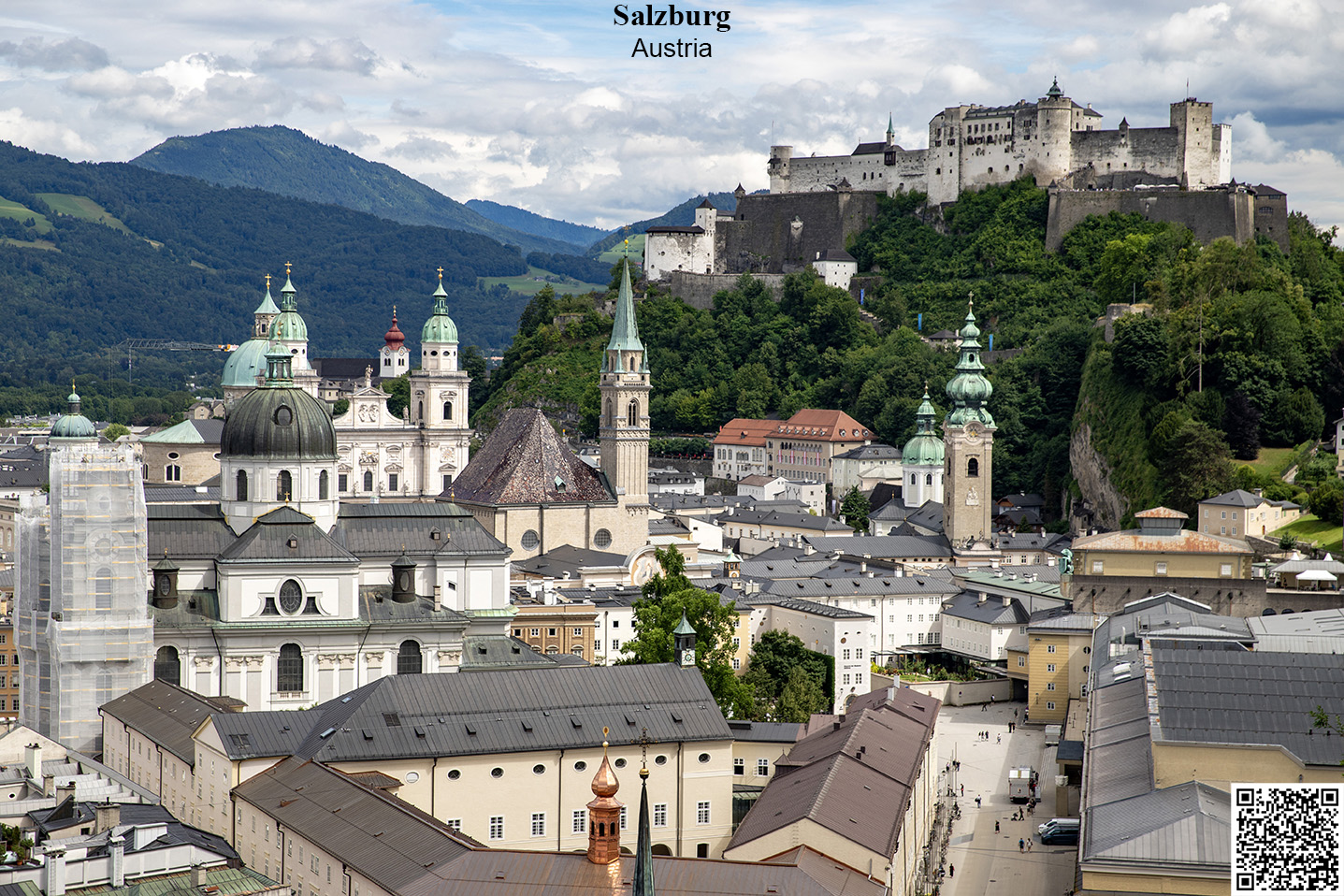
Salzburg started as a salt mining area under the Celts. Rome took over in 15 B.C. which was then taken over by the Prince-Archbishopric of Salzburg from the 8th century when it became an important salt extraction/trading post. We started the day at its highest point which is occupied by the mighty Hohensalzburg Fortress, the largest medieval fort in Europe. Needless to say, the fortress gave us the best view of the town. At the town centre sits the sumptuous Residenz, the official residence of the Salzburg Archbishop which, predictably, houses state rooms befitting an edifice of this importance. Attached to the Residenz is the city's grand cathedral and all of these occupied our forenoon.
In the afternoon, we checked out the sites that Salzburg is truly world famous for - its connections with music. It is the birthplace of Mozart and the backdrop of the famous 60s musical, The Sound of Music. At eight, when most of us would struggle to spell the word, he wrote his first symphony. We paid homage to the musical genius, first at his square and then at the residences, the house where he was born and the house where he stayed later in life when he had made more money. Although The Sound of Music was shot at various locations in the city, two of these have become iconic. First are the gardens adjacent to Schloss Mirabell which figured in the 'Do-Re-Mi' song and the second is the gazebo from the 'I am 16, going on 17' which is located at the grounds of Schloss Hellbrunn. While you are here, don't forget to check out the Marble Hall inside the Mirabell Palace and the 250-year-old fountains and the state rooms at the Hellbrunn.
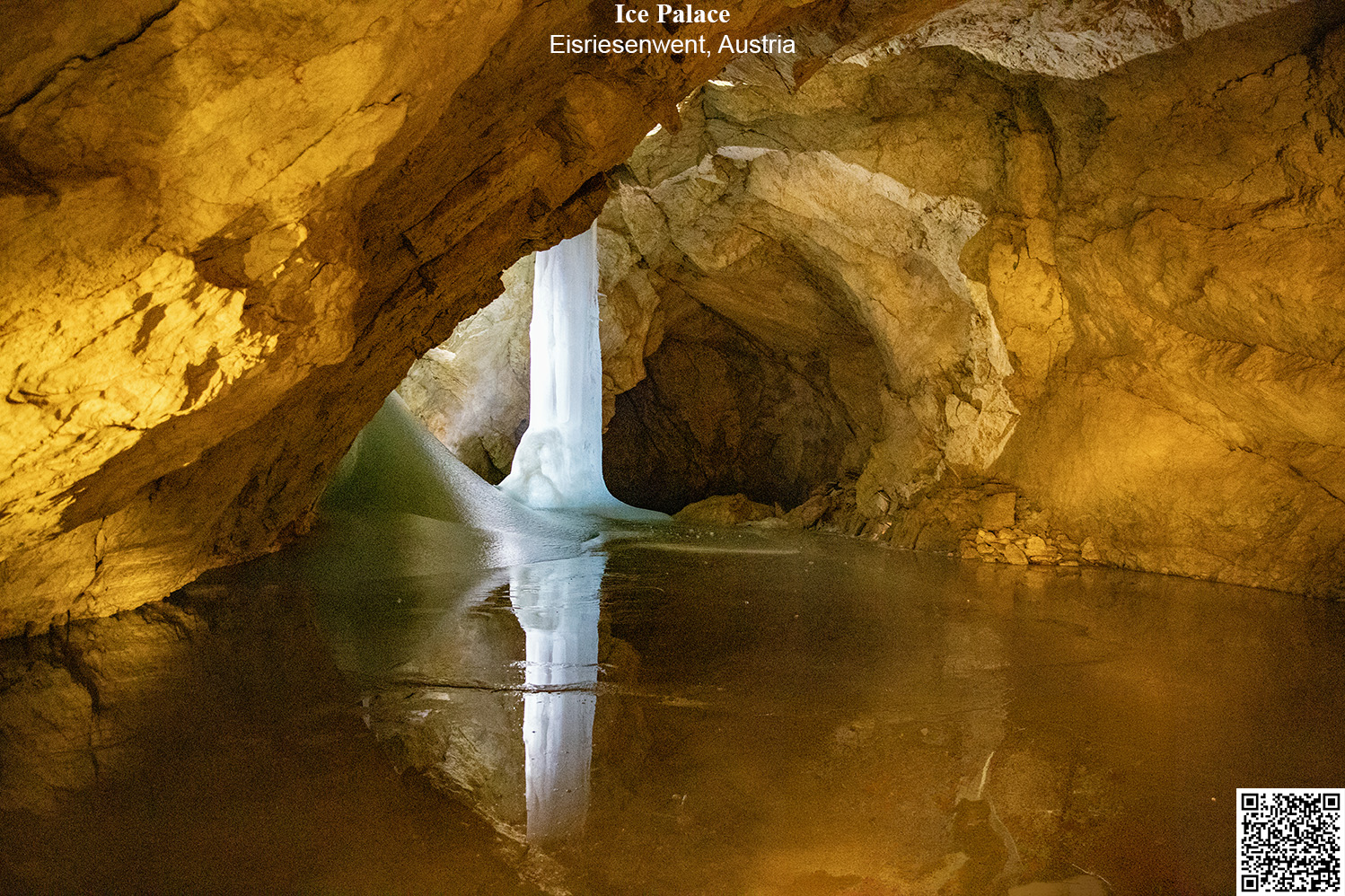
A short drive out of town is Eisriesenwelt, the largest ice cave on the planet and our first stop on day seven. An hour tour took us a kilometer deep into the cave past breathtaking formations: ice pillars, ice wall, ice tunnels and not to forget, an ice elephant. The rest of the day was spent on a long drive to Innsbruck with three worthwhile stops. First was the town of Kufstein which houses a 13th century castle and Römerhofgasse, a street that is decked up as if it is still the 1450s. Second was the famous Swarowski Kristallwelten, a museum dedicated to crystals. The umpteen Chamber of Wonders house giant installations which are designed to invoke wonder from everyone, from an easily impressible toddler to the seen-it-all geriatrics. The third and final stop was at the Hall in Tirol, a suburb of Innsbruck. We were just in time before the Pfarrkirche St. Nikolaus closed its doors for the night. The ceiling of the church is brilliantly frescoed by Viennese court painter Adam Mölk.
'Innsbruck' means Bridge over the river Inn and this river is the third largest tributary of the Danube. Hapsburg rise to power is mostly thanks to clever politicking and deal making (marriage or otherwise). In the early 15th century, Tyrol was in great debt to the neighbouring Bavaria. Maximilian, the son of then emperor Frederick III, took the opportunity to buy Tyrol and thereby inheriting the debt. He had married the Princess of Burgundy earlier and inherited the Low Countries from this alliance and he used the Dutch money to pay off the Tyrolian debt. Maximilian grew fond of the city and settled here and that put Innsbruck on the political map. The biggest attraction in town is the Golden Roof commissioned by Maximilian and dates from the 1500s. Nearby is the Hofburg, a palace that could rival the best Vienna has to offer. Its Giants' Hall containing the life size portraits of every one of Maria Teresa's children is a keeper. The adjacent Hofkirche is dominated by the giant cenotaph of Maximilian which is surrounded by 28 large life-sized bronze statues of his ancestors, relatives and heroes.
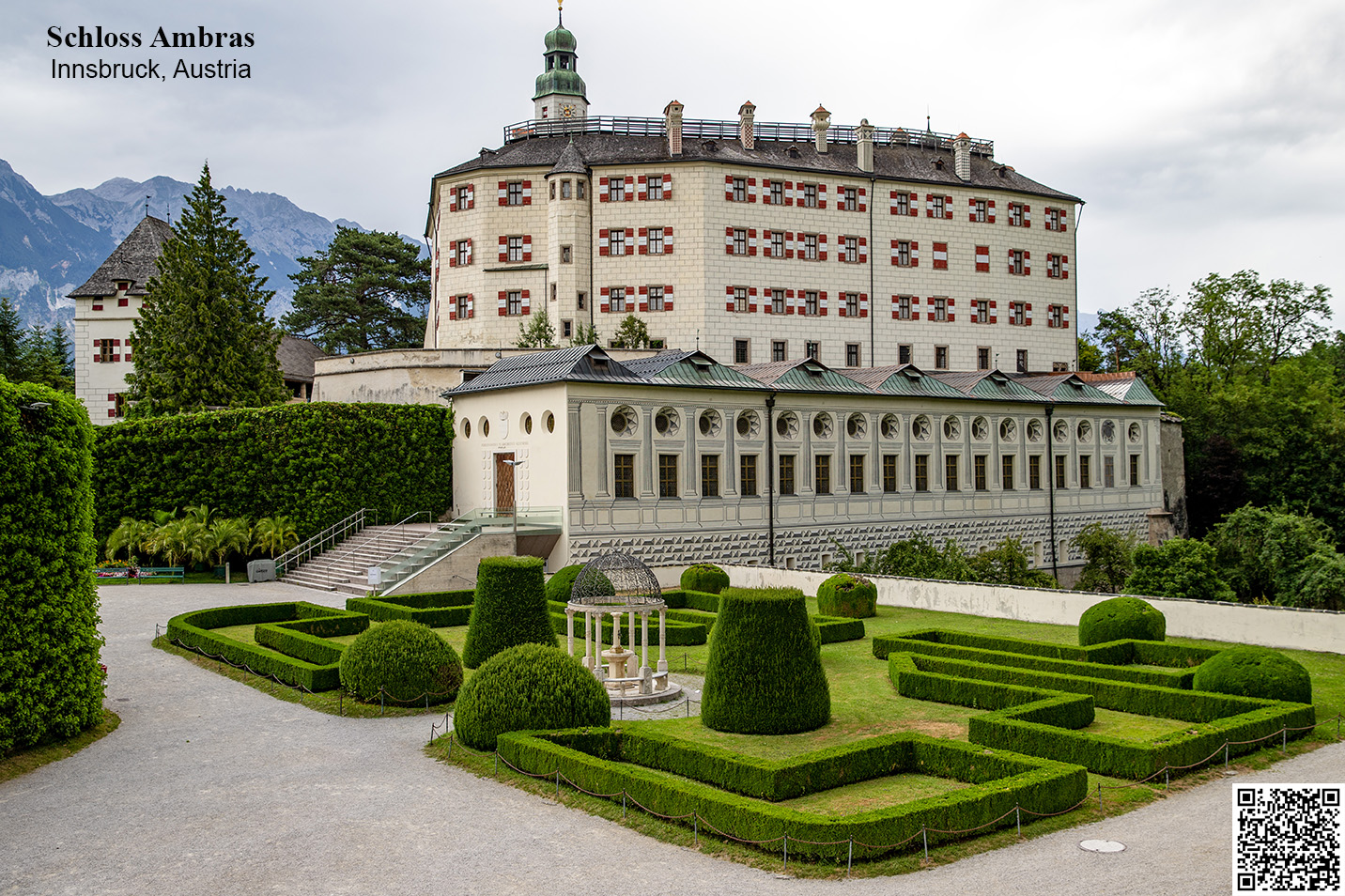
Schloss Ambras sits on the outskirts of Innsbruck. What you see today was largely built by Ferdinand II, the brother of Maximilian II, who used this fort to house his vast art collection which is still in display today. Apart from the precious art, the castle is famous for its Spanish Hall, one of the best example of German Renaissance.
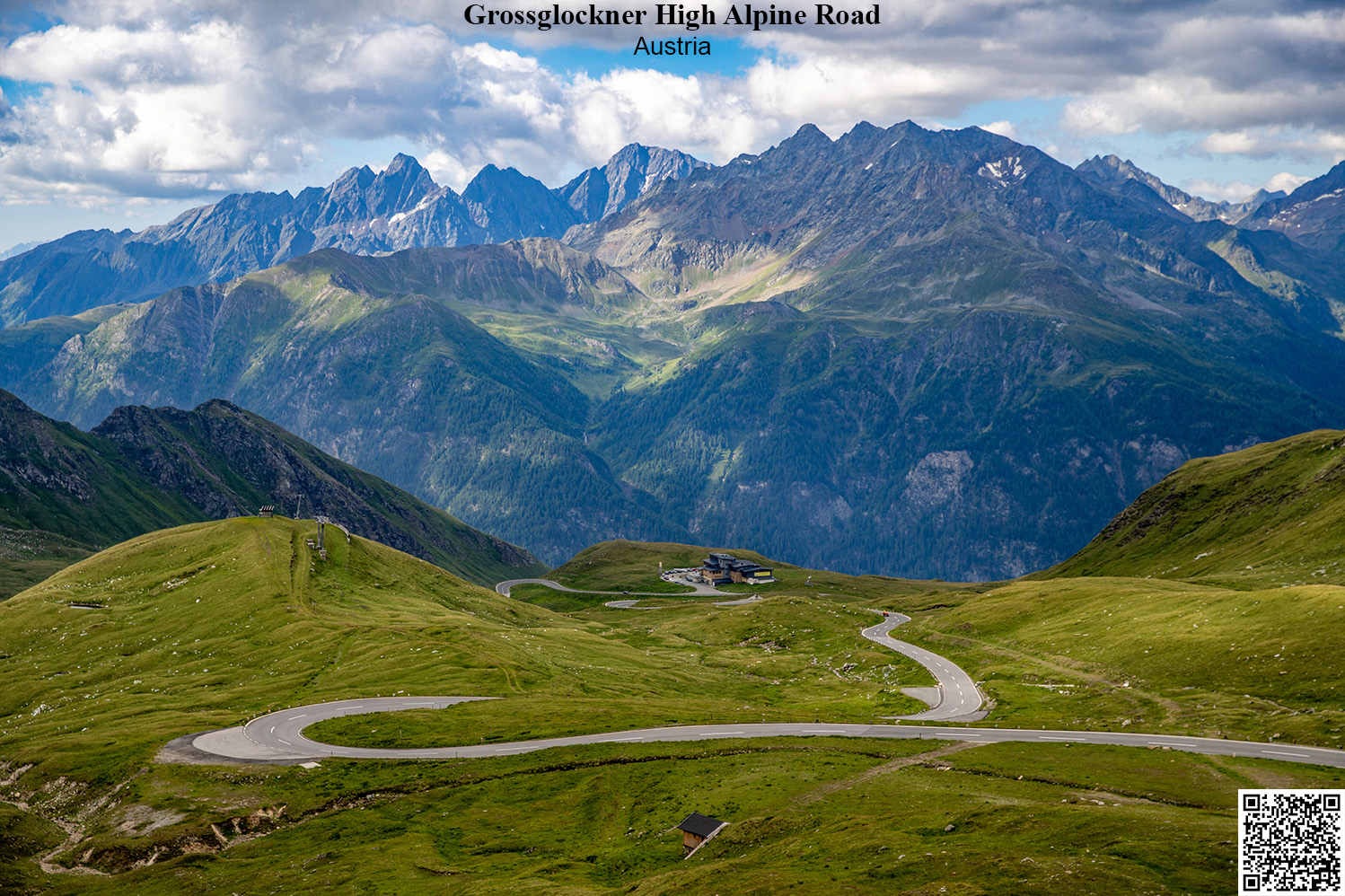
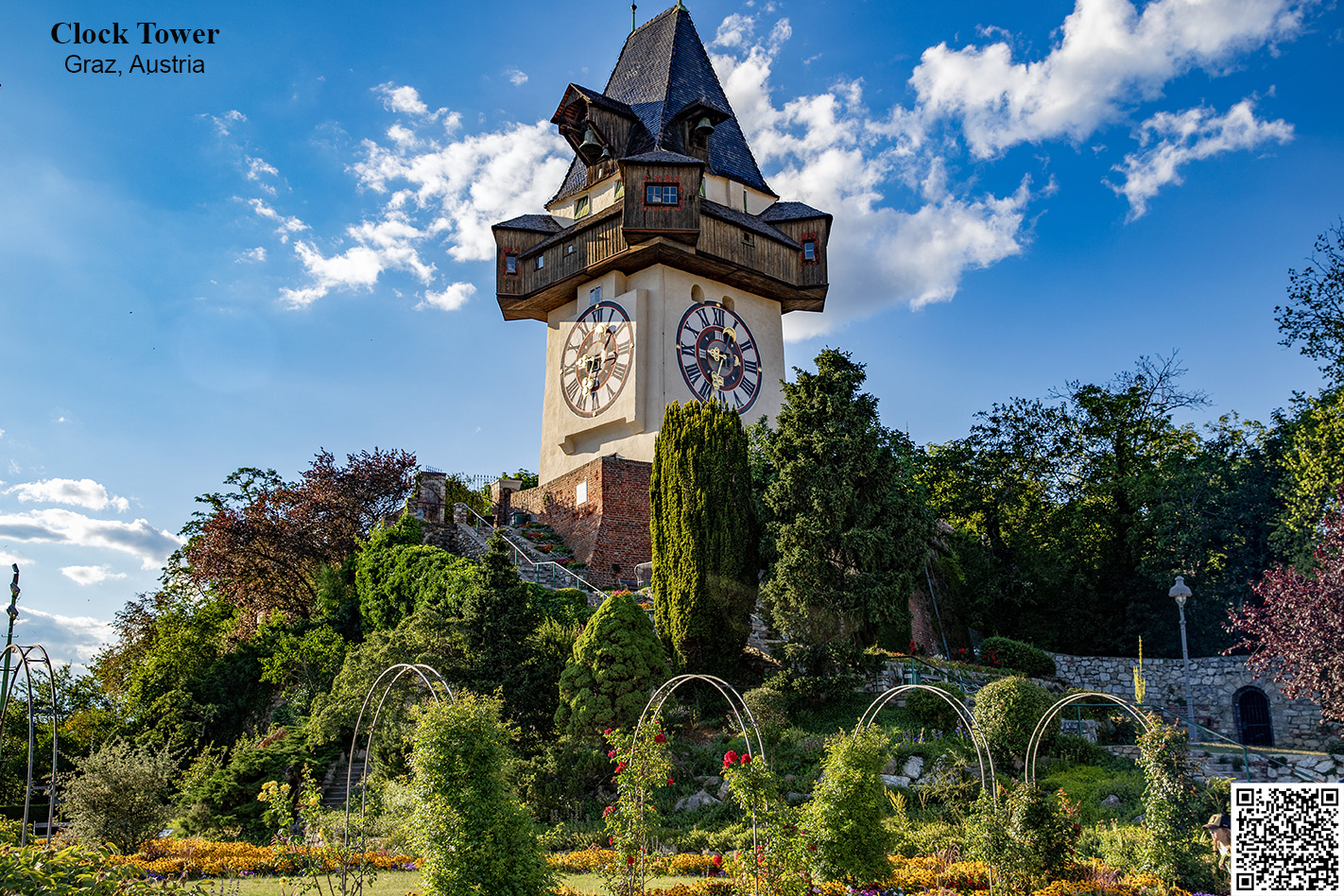
The main agenda of the following day was to drive the top scenic road in the country, the Grossglockner High Alpine Road which takes you past the Grossglockner, Austria's highest mountain. We did not get to enjoy the best of the weather conditions today, but the clouds occasionally cleared enough to give us a glimpse of the famed alpine scenery. The weather improved immensely once we got to the other side and we got to enjoy some of the lush green Austrian countryside on our drive to Graz. Graz, the second largest city, houses the most important palace in the state of Styria, Eggenberg. It was built by the chief advisor and finance minister of Frederick III, the father of Maximilian. The 24 state rooms culminating in the majestic Planetary Room was worth the trouble in overnighting in Graz. Apart from the palace, Graz also houses a famous 13th century clocktower that towers over the city centre. Huffing and puffing up there gave us a great panoramic view of the city.
The final day of the trip was a slow drive back to Vienna with a couple of worthwhile stops. First was at the Forchtenstein Castle, a 15th century castle that was under the control of the Esterházy family since 1626. This was the only castle in the region that did not fall to the Ottomans, thanks to which it houses an impressive Ottoman tent captured during the Great Turkish War. The second stop was at the Esterházy Palace, the residence of the owners of the Forchtenstein castle. The famous composer Joseph Haydn worked here for most of his life. The most famous room of the castle is the Haydnsaal where many of his works were believed to have been premiered.
There was one other quick stop - at the city of Wiener Neustadt. We only visited the cathedral here, which wasn't impressive enough to make it to this travelogue, but the town's history is. Remember the story of an Austrian duke selling Richard, the Lioheart for a hefty ransom? That money was used to build this city.
As it has been customary in the recent blogs, let me conclude with a food report. Despite known for its meaty affairs, there are traditional Austrian dishes that are vegetarian (well, at least, eggetarian). For example, the Knödel (which are dumplings and some traditionally have only vegetarian fillings), the Kaspressknödel (famous cheese dumplings from Tyrol) and the Kasespatzle (cheese noodles with caramelised onions). Some dishes can be veganised with slight modification. For example the Tiroler Gröstl (roasted potatoes with fried egg on top and you hold the bacon). Thanks to the increasing global vegetarianism we could even find a vegan version of the famous Wiener schnitzel made from chickpeas which we tried at the Velani in Vienna. If you are ok with eggs, you can knock yourself out on desserts. Austrian desserts are more famous than its main dishes. We made it a point to try them all: the Kaiserschmarrn (chopped pancakes with powdered sugar), Sachertorte (chocolate sponge cake), Linzertorte (a traditional Austrian spiced pastry topped with fruit preserves), Mozart balls (a marzipan and pistachio center, surrounded by hazelnut nougat) and of course, the ubiquitous Apfelstrudel.
Yes, it was a trip of cloyingly sweet dishes, cloyingly lavish palaces and cloyingly pretty landscapes. We knew that going in and which is why we had come to Austria. What we didn't know became the icing on the Apfelstrudel: the wonderful helping nature of the Austrians towards random tourists, the great public transport infrastructure which let us commute easily within the cities, the great roads despite the terrain which helped us commute between the cities and parking sports which were actually big enough to park a car! Vielen Dank, Österreich!
|
Click here for more photos from Vienna.
Click here for more photos from Salzburg.
Click here for more photos from Innsbruck.
Click here for more photos from Wiener Neustadt, Linz and Graz.
Click here for more photos from rest of the country.
|
|
|
|
|