The Netherlands
After being in Japan twice [1, 2] and missing out on its famous Sakura season both the times, we wanted to make it up by visiting the most famous flower-based destination on the planet at its peak bloom. We decided to visit the Netherlands in April. And since we now have a two-year free entry to the Schengen it was as simple as booking expensive air tickets and hotels. Not so quick, said the two wise men [1, 2] who promptly shut down the airspace over most of the Middle East after a bombing spree. Thankfully, things improved enough for us to land in Amsterdam just an hour later than our scheduled time, which is generally regarded as a steal even during the best of times. After landing in Amsterdam, we headed straight to Zaandam. Now, why would anyone do that? Well, Amsterdam is unaffordable for us, the non-aristocrats. Zaandam is how close anyone can stay to Amsterdam for under 200 euros a night.
Now that it was past noon and we were already in Zaandam, we decided to roam its pretty centre. The tiny Zaandam packs in an array of buildings with the most unique architecture, merging the traditional blue/green facades with quirky modern design, of which the most iconic example is the Inntel Hotel. Our first pictures of the Netherlands was of a functional contemporary hotel! A short bus ride away from Zandaam are the twin harbour towns of Edam and Volendam. The canals of these two towns are as pretty as they get and for someone who hasn't seen anything better than Chennai's Buckingham, these were fairytale perfect. On top of that, Edam is known for its cheese which goes by the same name as the town and we were just in time to taste it before the main cheese shop in town drew its shutters for the evening.
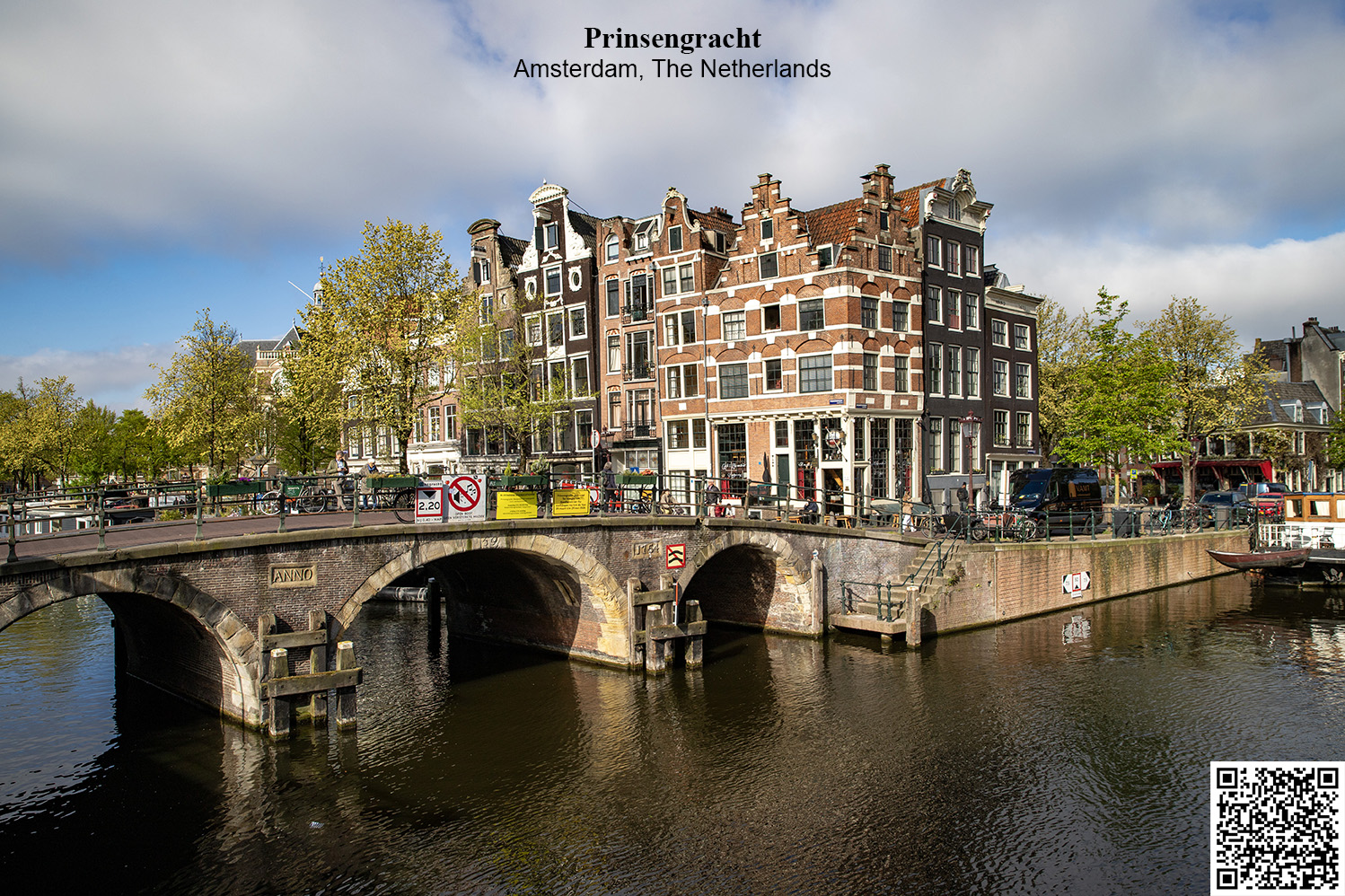
One our first full day in the Netherlands, we got up bright and early to get to the number one museum in the country: the Rijks which has re-opened after a lengthy decadelong reconstruction. The long timeline was thanks to the Amsterdam bike association wanting to keep cycling into the city through the museum. The design had to be changed to accommodate their demands. Only in Amsterdam would such a story make any sense. Thanks to our early start, we managed to see the top highlights including the world-famous The Night Watch in relative peace. We then quickly checked off the next highlight of the city - a canal cruise before heading to the most imposing building in the city - the Royal Palace imposing itself on the Dam Square. It was originally built as a City Hall in 1655 which Napoleon later converted to a Royal residence after his conquest of 'Les Pais Bas' and the Dutch Royal House just continued on the tradition set by the French emperor. Then, we also saw how the non-royal aristocrats used to live in the city. The Museums Van Loon and Willet-Holthuysen are couple of luxurious canal houses of Amsterdam that you can enjoy from the inside. It was now time to end the day on a high. We went up one of the tallest buildings in Amsterdam, the A’DAM Tower which has an observatory and a swing at 100 m above the ground. After a couple of good swings beyond the edge, we called it quits and headed back to our hotel to calm our nerves.
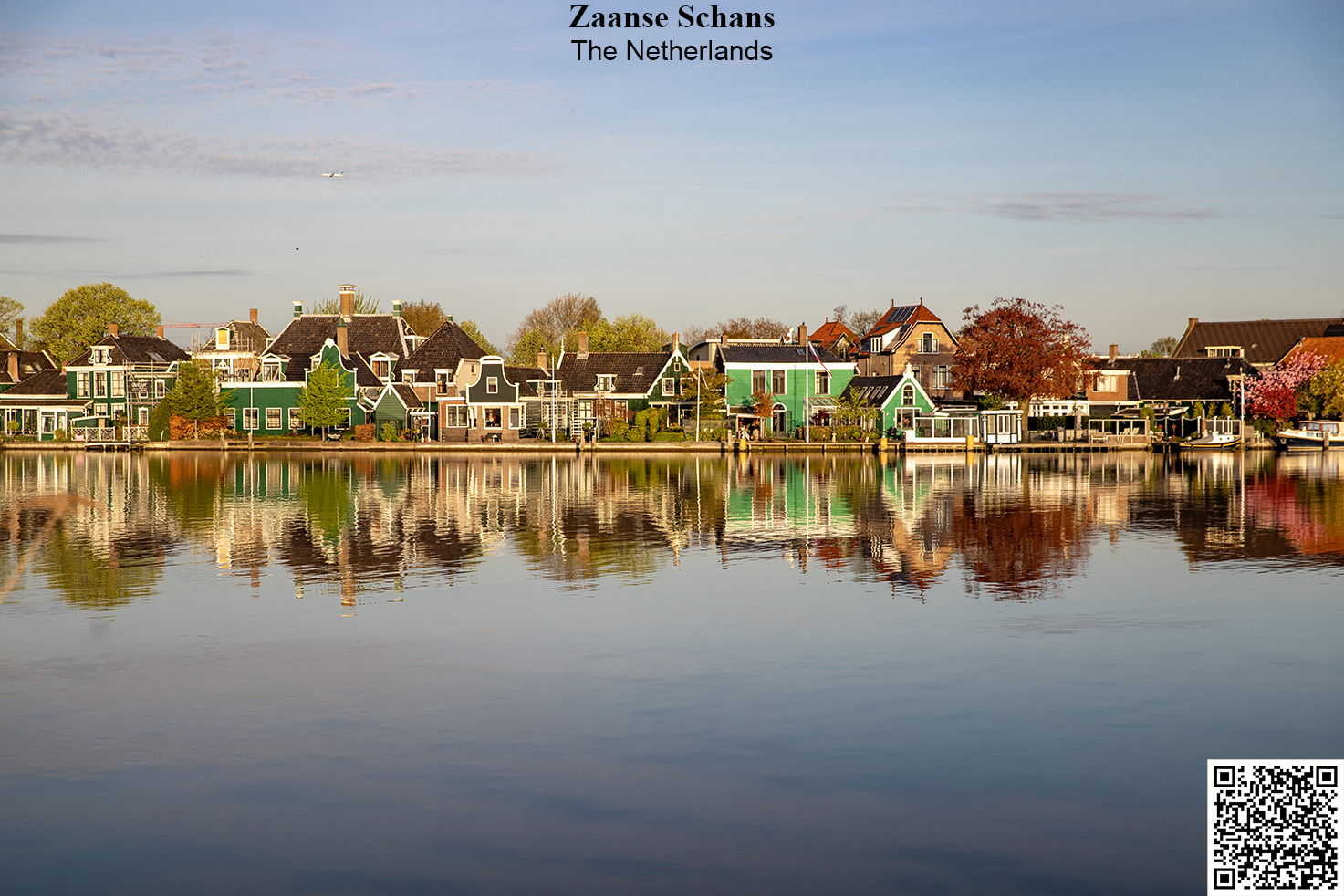
Zaandam's primary attraction is the village of Zaanse Schans. It is famous for its collection of windmills and wooden houses which were all relocated here during the 1960s from the wider Zaanstreek region. These buildings and windmills are outdoors and can be accessed for free round the clock. If you just want to see these buildings from the outside you can get here at dawn and have the place to yourself and enjoy the colourful reflections that they make on the nearby ponds in complete solitude. After criss-crossing the village for a couple of hours we headed to and reached Haarlem just as the museums and the churches were opening their gates to the tourists. It was the Dutch who colonised the Manhattan region of the Unites States and they found two cities there and named it after their favourites back home - Amsterdam and Harlem. They had to hand these over to the British after the Second Anglo-Dutch War and the British promptly renamed one of these towns as New York and the other kept its name and is now a neighbourhood in Upper Manhattan.
Let's get back to the Haarlem with two 'A's: We covered its Grotekerk, the Teylers Museum, the nation's oldest, which houses a giant electrostatic generator from the 19th century and the Franz Hals Museum housing the collection of paintings of Franz Hals, a Dutch Golden Age painter from Haarlem. Haarlem's Grotekerk is where we saw our first giant organ, the instrument that has replaced the altarpiece as the piece the resistance of a Protestant church. This one was played by the likes of Handel and Mozart.
We then headed to the other side of Amsterdam, to the Muiden Castle, a picture perfect castle that used to guard the important trade route to Utrecht. After a quick in and out we were back in Amsterdam late in the afternoon. But early enough to squeeze in one more attraction before our iAmsterdam cards expired. During the heights of Reformation, the non-protestants were not allowed to have their own places of worship. All the minorities, especially the Catholics, got together and converted narrow canal house into a cathedral: Our Lord of the Attic, a microscopic version of the lavish cathedrals in Spain that had bamboozled us in the past one year.
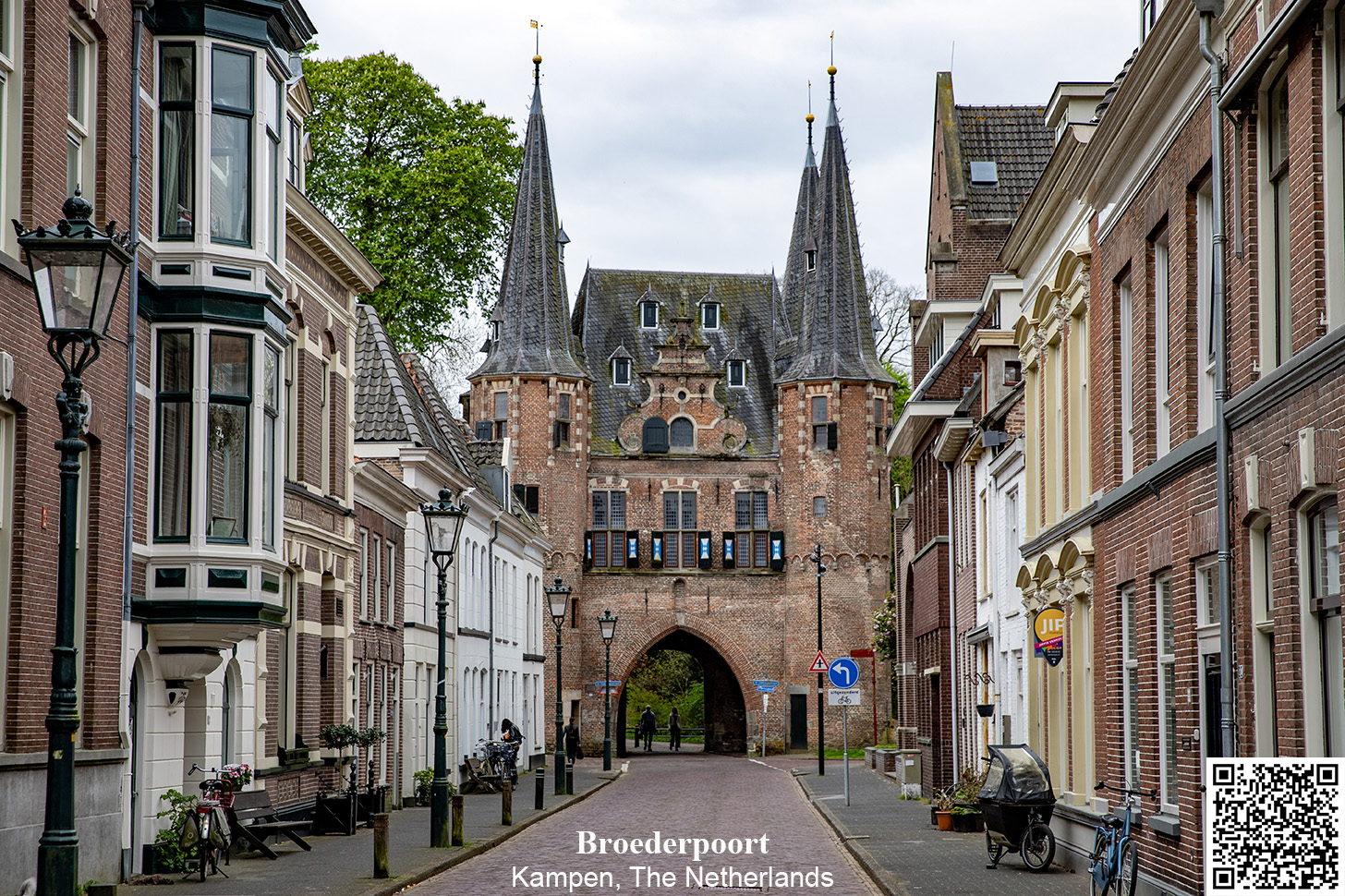
The following morning, we headed back to Amsterdam to check out its second famous museum, the one dedicated to one of the stalwarts of Post-impressionism: Vincent Van Gogh. All his signature paintings were there: Sunflowers, Irisis, Almond Blossoms, Wheatfields and the Bedroom in Arles. After a couple of hours moved by his paintings and more by his life we decided to get away from Amsterdam and check out a couple of Dutch towns famous for their gates. The first was Amersfoort which got its medieval walls constructed between 1380 and 1450. As a part of this construction spree, its main gate, Koppelpoort was also built. Finished in 1425 it is a combined land cum water gate controlling the influx on both the fronts. Further north is Kampen in the province of Overijssel which has one of the best preserved medieval city centres in the Netherlands. Three of the original 15th century gates are still standing and are grand, photogenic and in quite a good condition of preservation.
The agenda for the next day was to visit two of the big cities of Zuid-Holland - Leiden and the Hague, in that order with luggage in tow and end up at its biggest city, Rotterdam, for the night. Leiden played an important part in the famous Eighty Years' War. That is the war that led to the Dutch independence from the Hapsburg Spain. How the Siege of Leiden was broken by breaking the dikes and flooding the countryside so that the city could access the sea is stuff of legends. In return for its troubles, William of Orange gave Leiden the nation's first university whose alumni list include the likes of Johannes Diderik van der Waals, Christiaan Huygens and Hendrik Antoon Lorentz. For dumb tourists like us who still wonder why the sky is blue there are Molen de Valk, a tower mill dating from the early 1600s, Museum De Lakenhal housing works from the Dutch Golden Age and an assortment of historic churches. Leiden is also the hometown of the Dutch master, Jan Steen and this year he turns 400 (rather, "would have turned 400" as he is no longer alive). To celebrate the event, his paintings that would usually be ensconced at the Rijks was loaned to Lakenhal and we were able to see all his great works displayed in a single room. Among the churches the most noteworthy is the Pieterskerk, the church where the Pilgrims would pray for one last time before setting on a long one-way voyage to the Americas.
Amsterdam is just the constitutional capital of the Netherlands. The administrative capital i.e. the seat of the government has always been at the Hague. Hague is also where the famous Peace Palace is located, the headquarters of the Permanent Court of Arbitration and the International Court of Justice. We did not come all the way to Hague just to photograph the sumptuous Neo-Renaissance building from far, but to come face to face with the Mona Lisa of the Netherlands, the Girl with a Pearl Earring. This astonishing masterpiece by Johannes Vermeer hangs in the top floor of Mauritius, the premier art museum of the city. While you are here in the city, don't forget to walk through the Passage, the oldest shopping arcade in the Netherlands and gape at the Panorama Mesdag, a massive cylindrical painting 120 m in circumference and 14 m in height giving the user the illusion that they are standing on a dune overlooking the sea and village of Scheveningen in the late 19th century.
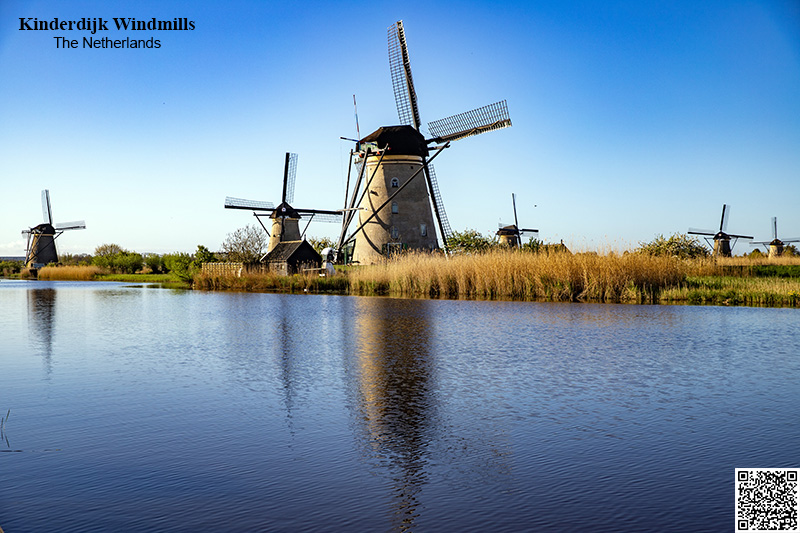
Now that the weekend was behind us and locals would have to get back to work, it was time to hit the more touristy parts of the country. On Monday, we visited Kinderdijk, an UNESCO World Heritage Site and home to the largest collection of old windmills in the country. It has 19 windmills dating from the 1740s. Just as in Zaanse Schans, the site is freely accessible round the clock to enjoy from the outside. One needs tickets and timed entries only to enter individual windmills. 'Kindedijk' means 'Children Dike'. According to a story that goes back to the Saint Elizabeth flood of 1421, a cradle with a sleeping baby was found at this dike with a cat trying to help the cradle stay afloat and balanced and not tip over.
Mondays have their downside as well. Most attractions take a break on this day closing their doors for the tourists. So, we had to research a bit to pick the towns where most stuff would be open. Everything in Dordrecht was closed on Mondays, but Breda seemed open for business and that's where we ended up after our fill of the windmills. Do you still remember the story from few paragraphs ago where the Dutch surrendered New York and Harlem to the British? That deal was part of the Treaty of Breda which was signed at the Castle here. Apart from the castle, which you can only see from the outside, Breda has a lovely Stadspark, a quiet Beguinage and a gigantic Grote Kerk with a 97 m tall tower and an ornate Prince Chapel dedicated to the ancestors of the Dutch royal family, the House of Orange-Nassau.
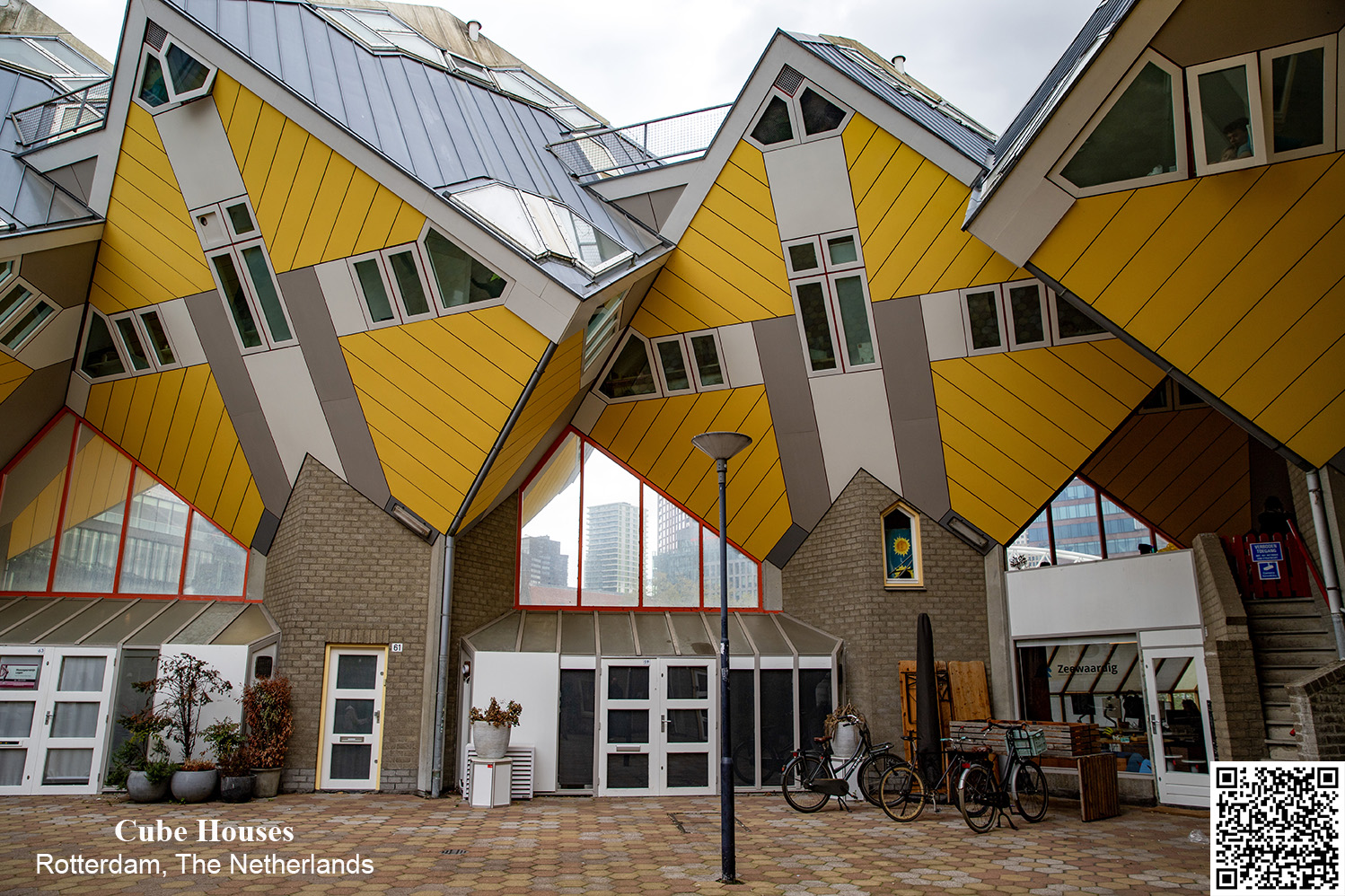
It was now time to check out the city that has been hosting us for two nights: Rotterdam. The city was flattened during the Second World War and it was decided to rebuild the city not as what it used to be, but one with a completely modern look. It, hence, became a laboratory for the architects to experiment with all sorts of quirky designs and we visited the top three. First were the iconic Cube Houses designed by Piet Blom in 1972 and built later that decade. These cubes resting on its vertices were designed to serve as a residential complex. The next was the nearby Markthal, a residential cum office building opened in 2014 which looks like a cuboidal shell with a large 'Market Hall' in its centre. The last was the Depot, a giant conical 'flowerpot' shaped building, about 40 m tall, with reflecting plates on the outside, a forest of trees on top and the city's precious art collections on the inside.
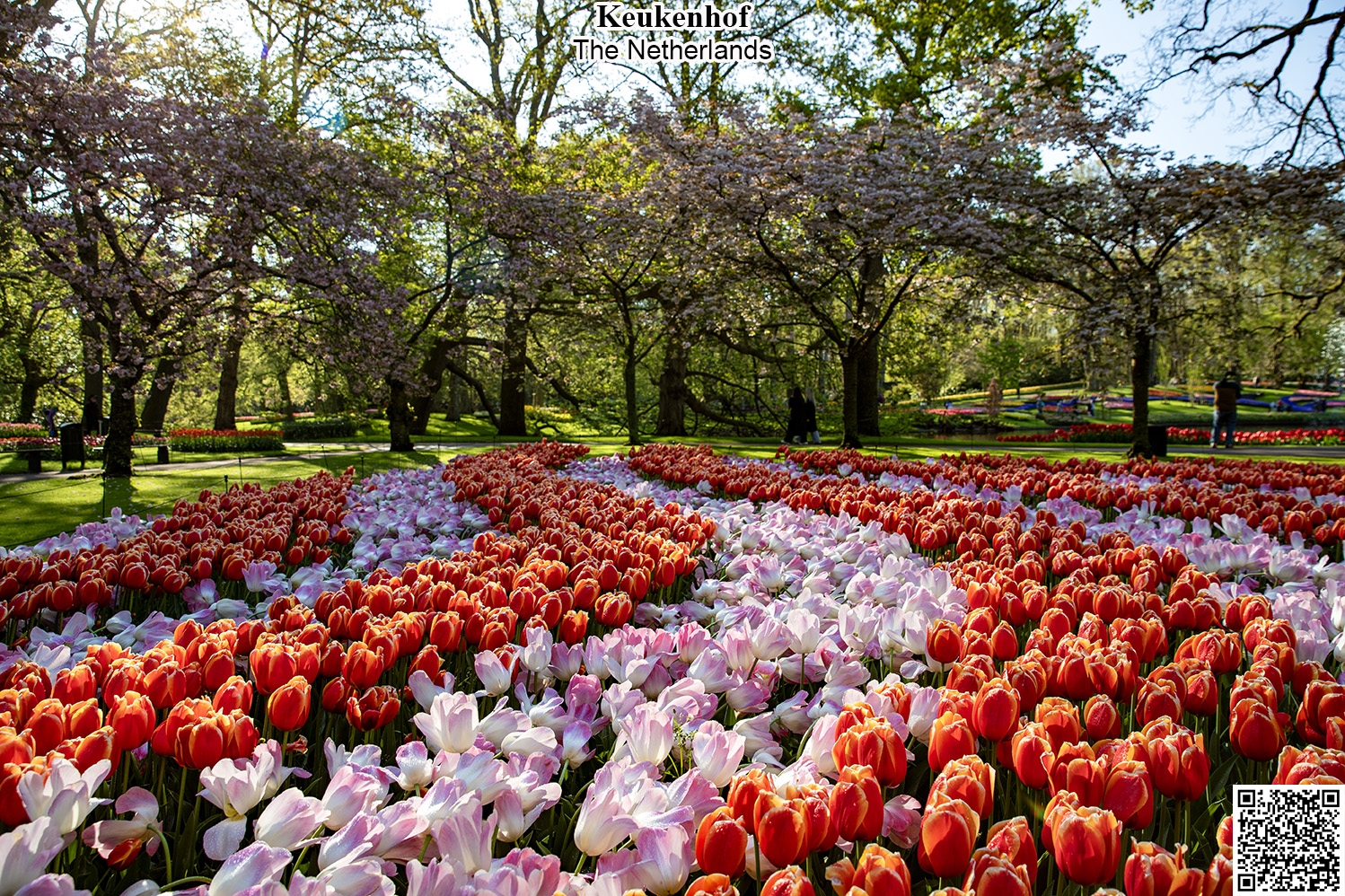
Our Tuesday started at the number one tourist attraction in all of Netherlands and the only one we Indians know about the country before doing any research: the Keukenhof. The name literally means "Kitchen Garden" in Dutch as it was one for the Slot Teylingen. In 1949, it was converted into a park by a consortium of local bulb growers to showcase their products and they opened it to the general public the following year. In 1980, Bollywood landed here and shot that famous song for the movie Silsila and Dutch tulips became the only thing we knew about Netherlands ever since. The gardens receive close to 1.5 million visitors every year, which works out to be about 750,000 per month because the gardens are open only for two months a year (from mid-March to mid-May). Book early enough to get the 8 am entry and walk in the opposite to the crowd (who are making a beeline to the only windmill in the park) and you can have a section of the park devoid of people for a good half an hour. The gardens were spectacular and the tulip collection phenomenal. Looking at them, it became clear why the Tulip Mania was the world's first speculative bubble. One can easily believe that someone would buy them from you for an astronomical sum.
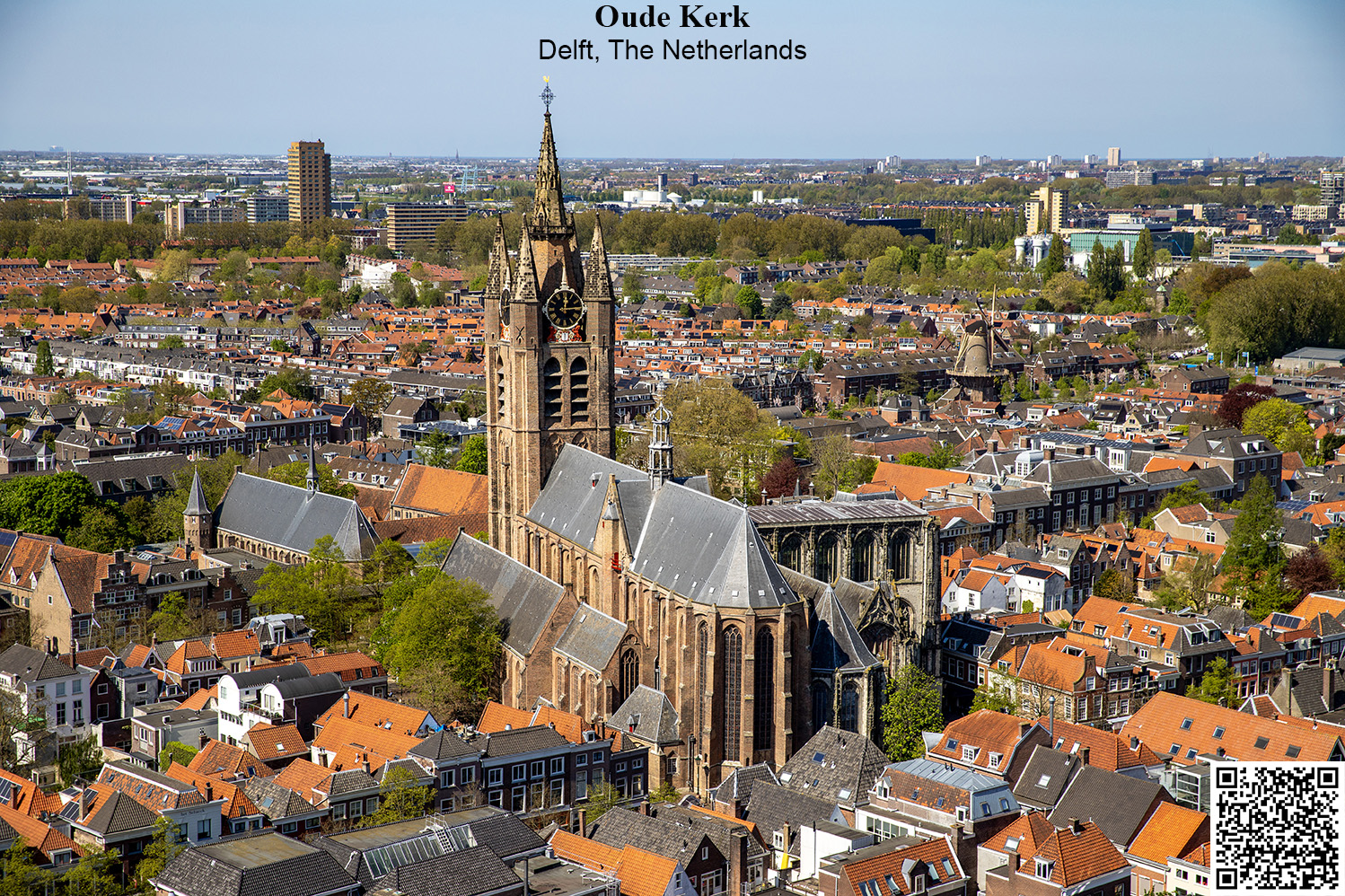
Little south of Keukenhof is Delft well known for its fine blue coloured pottery called the Delftware. Delft is the final resting place of the Dutch royal family, home to one of the world's top technological university, hometown of Johannes Vermeer and thanks to one Antonie van Leeuwenhoek (the inventor of the modern microscope), the birthplace of Microbiology. Its top two tourist sights are both churches, simply and aptly named the Old and the New Church. The Old Church was founded in 1246 and its tower was added between 1325 and 1350. The existing canal was diverted to make room for the tower which resulted in the tower standing on unstable land and that in turn has resulted in its famous lean. The New Church was completed in 1496 and its 109 m tall tower offers one the of the best views in the country. The New Church is where most of the Dutch royalty are buried and the tomb of William, the silent, is, expectedly, the most impressive.
We now had just enough time to check out Dordrecht which we had skipped the previous evening. It was in Dordrecht where the famous Union of Dordrecht was formed, the union where the Dutch city states came together to oppose the Spanish rule, the first crucial step in the Dutch Revolt. Dordrecht's prime attraction is its main church which was completed in 1470 and houses the biggest bell in the Netherlands. After visiting the church we spent the rest of the afternoon walking the pretty canal town.
The following morning we checked out of Rotterdam, dropped our luggage in our next hotel in Utrecht and then back tracked to visit Gouda. Gouda is well known around the world for its namesake cheese. Gouda cheese can be bought anywehere, but there is one thing in Gouda that you have to come here to enjoy. Its St James Church, the church with the largest stained-glass collection in the country. It was very interesting to see the pre and the post Reformation stained glasses adorning the walls of the same church.
Utrecht lies on the south side of the Rhine, the river that marked the Roman borders. Rome built a fort here to house a garrison to protect their northern border and it has grown into the city that we see today. Carolingians replaced the Roman fort with a chapel in the 7th century, Bishop Adalbold swapped it for the first Romanesque cathedral in the 11th century and the current Gothic Domkerk was built on top of it between the 13th and the 16th centuries. Utrecht was an important Catholic seat and its cathedral was the largest in the Netherlands. Unfortunately, half of it collapsed in 1674 and was never rebuilt. What remains is open to public now. The church tower now stands apart from the church and at 113 m, it is the tallest in the country and you can climb all the way to the top for some spectacular views.
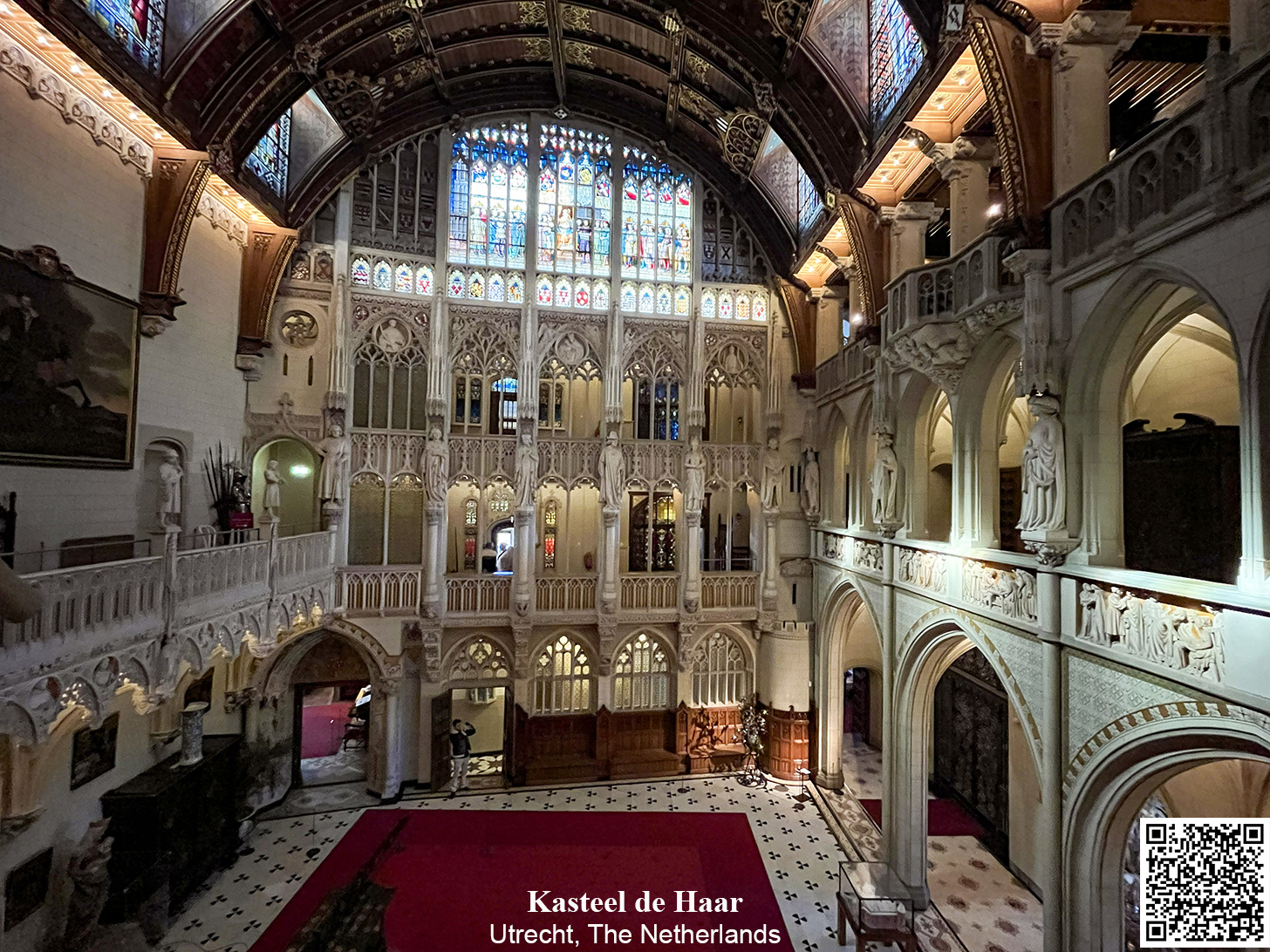
On the outskirts of Utrecht sits Haar Castle, the largest caste in the Netherlands. It was a bit of a pain to get to using public transportation, but was worth the effort. The original castle dates back to 1391. But most of what you see today is thanks to extensive reconstruction done in the 1890s. The architect was Pierre Cuypers, the same one who had designed the Rijks and the Amsterdam Centraal. The result looks like an edifice plucked right out of a fairytale book. And the exterior is nothing compared to the main hall of the palace. The Knight's Hall (to give its actual name) is designed to make every jaw drop. Trying to describe it is futile. I have placed a picture of it on this page to save me the trouble.
The last full day of the trip saw us heading to the far southest corner of the country. To Maastricht. It was founded by the Romans as that is where they built a bridge to cross (i.e. 'traject') the Maas river. That bridge has now been replaced by a stone bridge from the 13th century. Maastricht houses two basilicas. First is the Basilica of Saint Servatius which houses the grave of the 4th century saint. Its fantastic South Portal alone is worth all the trouble in getting to Maastricht. Second is the Basilica of Our Lady, a 11th century Romanesque church dedicated to Our Lady, Star of the Sea. Between the two churches stands Sint Janskerk whose tower can be climbed for the best views in the city. There is one last church that is also a must-see. A 13th century Dominican church converted into a modern bookstore. You can order a cappuccino, find a cozy corner and browse travel guides and when bored, look up to see fading medieval frescoes. These Dutch know how to live a good life.
On our way back to Utrecht we stopped at Den Bosch, short for 's-Hertogenbosch, short for des Hertogen bosch which translates to 'The Forest of the Duke'. It was here that one Hieronymus Bosch was born in the mid-15th century. A century old church in town has been converted to an art centre dedicated to the painter. It houses the copies of all his famous paintings included the most famous: The Garden of Earthly Delights (the original is now a fading memory from our trip to Prado about an year ago). Den Bosch also houses the finest cathedrals in all of Netherlands, Sint-Janskathedraal. It is the textbook example of Brabantine Gothic, a style that originated in these low countries in the 13th century. A colleague and an old friend of mine stays just a short train ride away from Den Bosch and he and his wife were kind enough to host us for the evening and thanks to them, we got to spend one of the best evenings of our lives.
Our flight on the last day wasn't flying out until 2 pm which gave us sufficient time to check out the last of the must-visits, the Anne Frank House. It was where one Jewish family went into hiding when the Nazis occupied Amsterdam. One of the family members was Anne Frank, a 13-year old child who decided to maintain a meticulous diary of her life when being locked up in the attic. They were eventually discovered by the Nazis and deported to concentration camps just months before the eventual end of the war. Of the eight who went into hiding, only Anne's father survived and he helped in publishing Anne's diary which is one of the most well known books on the planet.
I had deliberately not talked about food so far so that I have something positive to end this travelogue with. The best traditional savoury dish we had was the sumptuous Rijstaffel, an elaborate Dutch-Indonesian dish that was invented in the Netherlands and one which isn't yet available in the home country. A close second would be the Pannenkoek or the Dutch pancake. Yes, Dutch pancakes are savoury. A very close third would be the Bitterballen, which traditionally has meat fillings, but were veganised for us by substituting the meat with mushrooms. The best savoury snack was of course the Pommes Frites or the Dutch potato fries and a cone-full would get you going for the entire day. The list is endless when it comes to desserts. Our favourites in no particular order are: Vlaai (a traditional pie made of cherries or crumbled butter or custard), Stroopwaffel (two layers of sweet baked dough held together by a syrup filling), Poffertjes (fluffy bite sized pancakes) and the one and only Apple Pie served at the Winkel 43. These desserts are the reasons why we came back 3 kilos fatter despite clocking 30,000 steps a day for 9 consecutive days. The Universe is unfair.
|
Click here for more photos from Amsterdam.
Click here for more photos from North Holland.
Click here for more photos from South Holland.
Click here for more photos from Kinderdijk and Keukenhof.
Click here for more photos from rest of the country.
|
|
|
|
|