Western Turkey
The best Greco-Roman ruins on the planet are neither in Greece nor in Rome. They are in Turkey. Also known as the Asia Minor, Anatolia was the beating heart of the Greek culture. It was the birthplace of Homer, Herodotus and Galen. Ionia, the most famous sub-region, is how people east of here refer to the entire civilisation. Yavanas in Sanskrit and Yunanistan in Turkish derive from the word 'Ionia'. As if these weren't enough of a reason to visit Anatolia, Istanbul has a direct flight from Mumbai (avoiding a hop over in countries bordering Hormuz) and Turkey allows Indians with a Schengen visa to waltz in. Hence, we closed our 2026 travels with an epic road trip across Western Anatolia covering a score evocative ruins in less than ten days.
First day was lost in getting to İzmir and rental-car hiring festivities. The following morning, we started at one of the classic stops on the Asia Minor circuit, Pergamon. In 330 BC, or thereabouts, Alexander the Great, swept through Asia which also included this part of Turkey. After his demise, his generals fought amongst themselves and divided up the vast empire. Three main dynasties were left standing when the dust settled - the Seleucids (who controlled the east), the Antigonids (who controlled the west) and the Ptolemies (who controlled Egypt). In between the three, one Attalid dynasty managed to carve out a small piece - the short-lived Kingdom of Pergamon. In a span of about 150 years, they managed to convert Pergamon into a mega-polis. The library here rivalled that of Alexandria. Spooked about losing its top position, Ptolemies cut off the papyrus supply to the world, the only source of paper in ancient world outside of China. Unfazed, Pergamon resorted to mass producing a writing material made of sheepskin. They exported it all over and stamped their name on it: 'pergamenum' (i.e. Made in Pergamon) which got corrupted to 'parchment', the name by which we know it today. Hardly anything survives of the famous library. The next top monument used to be the Altar of Zeus. That is now replaced by a gigantic tree, the actual altar safely ensconced in the namesake museum in Berlin. Then, why take the trouble of coming all the way here? Well, the Temple of Trajan, the Sanctuary of Demeter and the astonishing theatre, the steepest in the ancient world, more than made up for the effort in getting to Pergamon today.
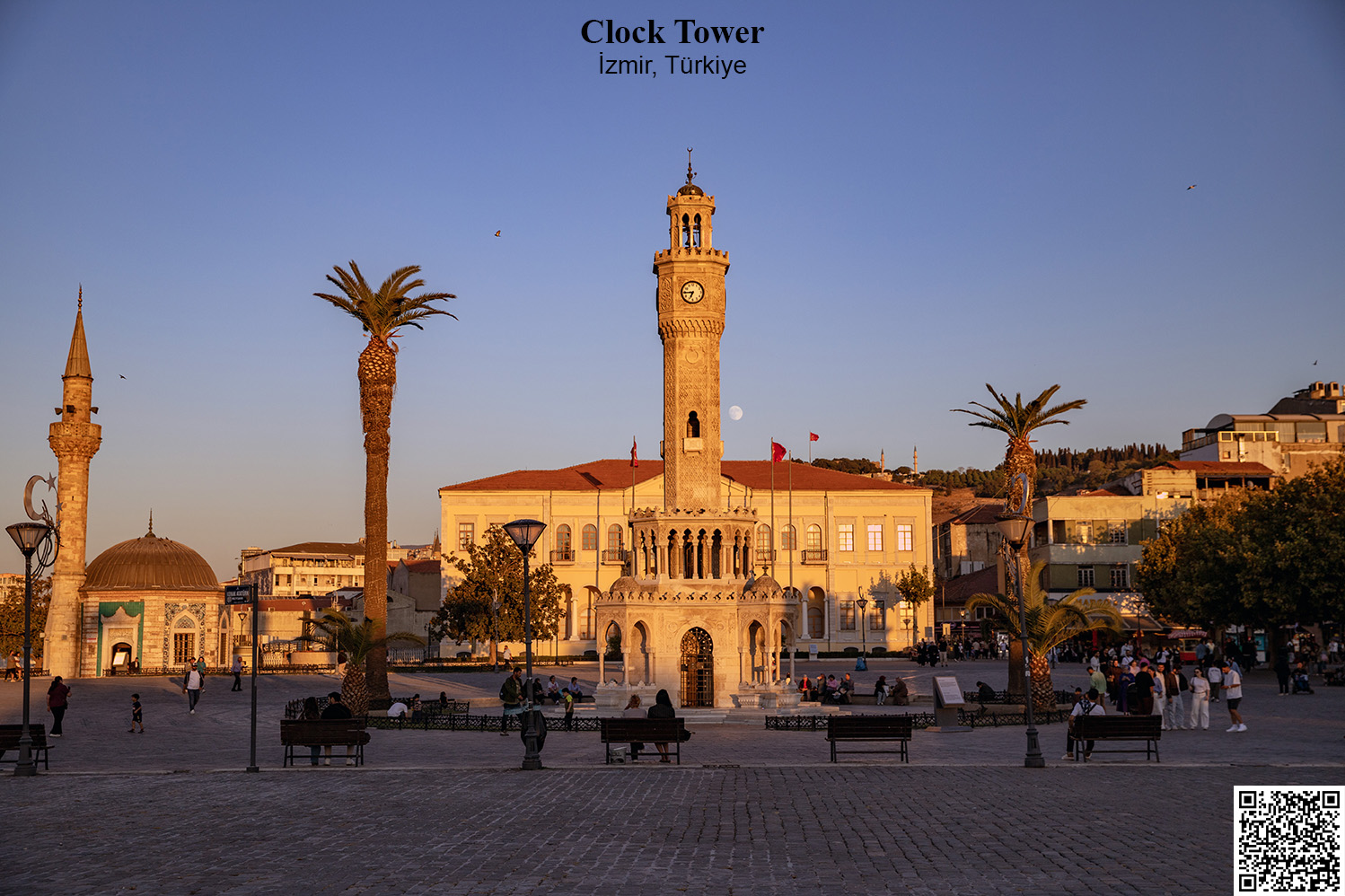
An hour and a half south-west of Pergamon is Sardis, the location of one of the famous anecdotes of Herodotus. Solon, the lawgiver of Athens, undertook a 10-year sabbatical after making his famous laws. His wanderings brought him to Sardis, the capital of Lydia, which at that time was ruled by the richest man on the planet, Croesus. He flaunted his wealth and taunted Solon to naming him as the happiest man on earth. Solon refused citing that all of these could be lost overnight which is precisely what happened when Cyrus the Great, annexed Lydia into his vast Persian Empire. Hardly anything survives from the days of Croesus. Sardis, today, houses a marvelous second century gymnasium and a 3rd century Synagogue, the largest Jewish site from antiquity. Back to İzmir for the night, we had just enough time to squeeze in a quick visit to the Archeological Museum and catch the sunset at its century old clock-tower.
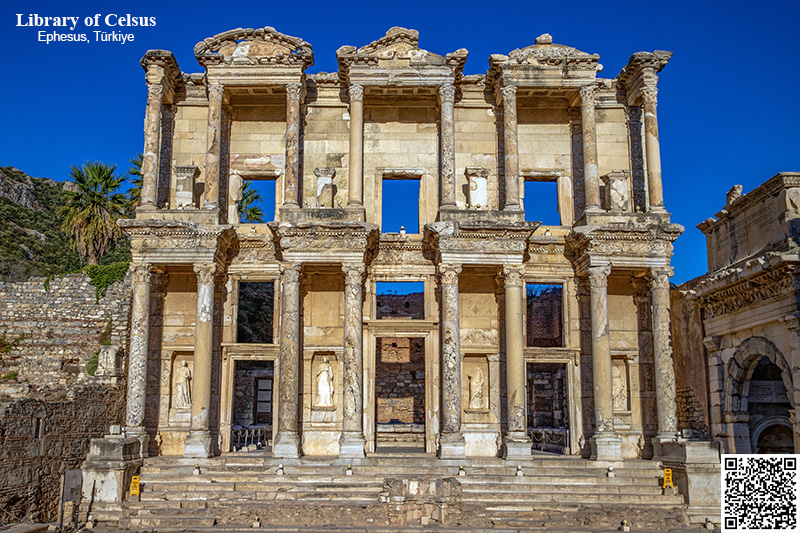
The first stop following morning was at the most famous of all Anatolian ruins - Ephesus. If you are seeing just one ruins on your Turkey trip, make it this one. Ephesus is so old that its genesis is shrouded in mystery. It was already the capital of Arzawa (the political entity which also controlled Troy) during the late Bronze Age. It played an important role in the Greco-Persian Wars and the Peloponnesian War. It was home to one of the Seven Wonders of the Ancient World, the Temple of Artemis and housed the remains of one of the apostles of Christ - St John. Only a solitary pillar remains of the former while the latter is survived by a few more resilient ones. The most eye-catching structures are at the ancient city ruins, and it doesn't get any eye-catchier than the second century Library of Celsus, which has one of the best facades from antiquity. If you come this far, don't skip the Terrace Houses, a bunch of houses dating back to first century BC containing stunning mosaics and frescoes.
Continuing southwards, we soon reached Priene. Everything here looks like a demolition zone except for the four resilient pillars of the Temple of Athena erected by Alexander. The dramatic location with a massive cliff in the backdrop makes it quite photogenic. Priene was the home to Bias, one of the Seven Sages of Greece.
Further south is Miletus, home to another of the Seven Sages: Thales. He is considered to be the first western philosopher and the founder of the first school of thought - the Milesian School. You might recall from your high school maths that the diameter of a circle always subtends a right angle, that theorem was found and named after Thales. Note that Thales is long gone and is not the reason why anyone visits Miletus today. You come here to gape at its beautifully restored theatre. A little further from Miletus is the temple town of Didyma. It has housed a temple dedicated to the twins Apollo and Artemis at least since the 8th century BC and once rivalled the Ephesus Artemis temple in grandeur. Fortunately, enough of Didyma temple survives to give you an idea of the sheer scale and size of the original structure. This is a truly breathtaking piece of architecture. Rest of the afternoon was spent on a long and arduous drive to Fethiye.
Normal people come to Fethiye to start their Mavi Yolculuk, a fantastic voyage along the Turkish Riviera. Trekkers come here to start their walk on the Lycian Way. We are too prone to seasickness and too wobbly-kneed to attempt either. Our reason to overnight in Fethiye is to cover the famous Lycian sites on our one-way, day-long drive to Antalya. Lycia's history goes back a long way. It was likely the Bronze-age Lukka, a fiercely independent set of city states occupying the rugged southern Anatolian coast and remained unconquered by the Hittites and the Egyptians. Achaemenids eventually conquered them and they were later Hellanised after Alexander's conquest. Their unique rock-cut tombs make their ruins stand out among the rest of the Greco-Roman sites of Anatolia.
As this region is famous for its coastal views, we took a morning detour to visit the famed Butterfly Valley before heading to our first stop. And that first stop was at Xanthos, the ancient capital of Lycia. People here chose to self-destruct twice instead of surrendering to enemies. Very little survives as a result. It does house some of the famous Lycian tombs - Harpy which is still in situ and the Nereid Monument which is safely ensconced in the British Museum. The nearby Letoon gets its name from the sanctuary dedicated to Leto, mother of Apollo and Artemis. It is believed to be the location of one of the stories in Ovid's Metamorphoses - one where Leto transforms the Lycians to frogs. Letoon once housed a triple temple dedicated to Leto and her children of which just four pillars of the Apollo temple have survived till today.
Visual impact of the ruins improve dramatically as you move along the coastline. The next city - Patara - was a megapolis and was home to the Lycian League, a union of cities where every member had a certain number of votes proportional to the population: world's first known experiment with Representative Democracy. The Bouleuterion, where the league routinely met, has been restored to its former glory. Antephellos, further up the coast, houses the most dramatic theatre in Anatolia, the only one facing the sea. And the only one to lack a proscenium, the sea making up for its absence.
Last, but not the least, was Myra. It houses the most impressive set of rock-cut Lycian tombs. Dozens of tombs have been cut into a sheer cliff and the first sight of it is sure to take your breath away. A couple of kilometers from the tomb lies a ruined basilica built by Justinian in the mid-6th century. It replaced an earlier one where one Saint Nicholas served as a bishop in the 3rd century. The story goes that he often gave secret gifts to children and once even resurrected three children murdered by a butcher. Stories such as these made him the patron saint of children and over time his name got corrupted to Santa Claus. Alas, he is not here anymore. By that I don't mean the obvious that he is dead. I mean his tomb was broken in by Italian merchants in the 11th century and his remains are now in Bari. His broken tomb is all that is left in Myra.
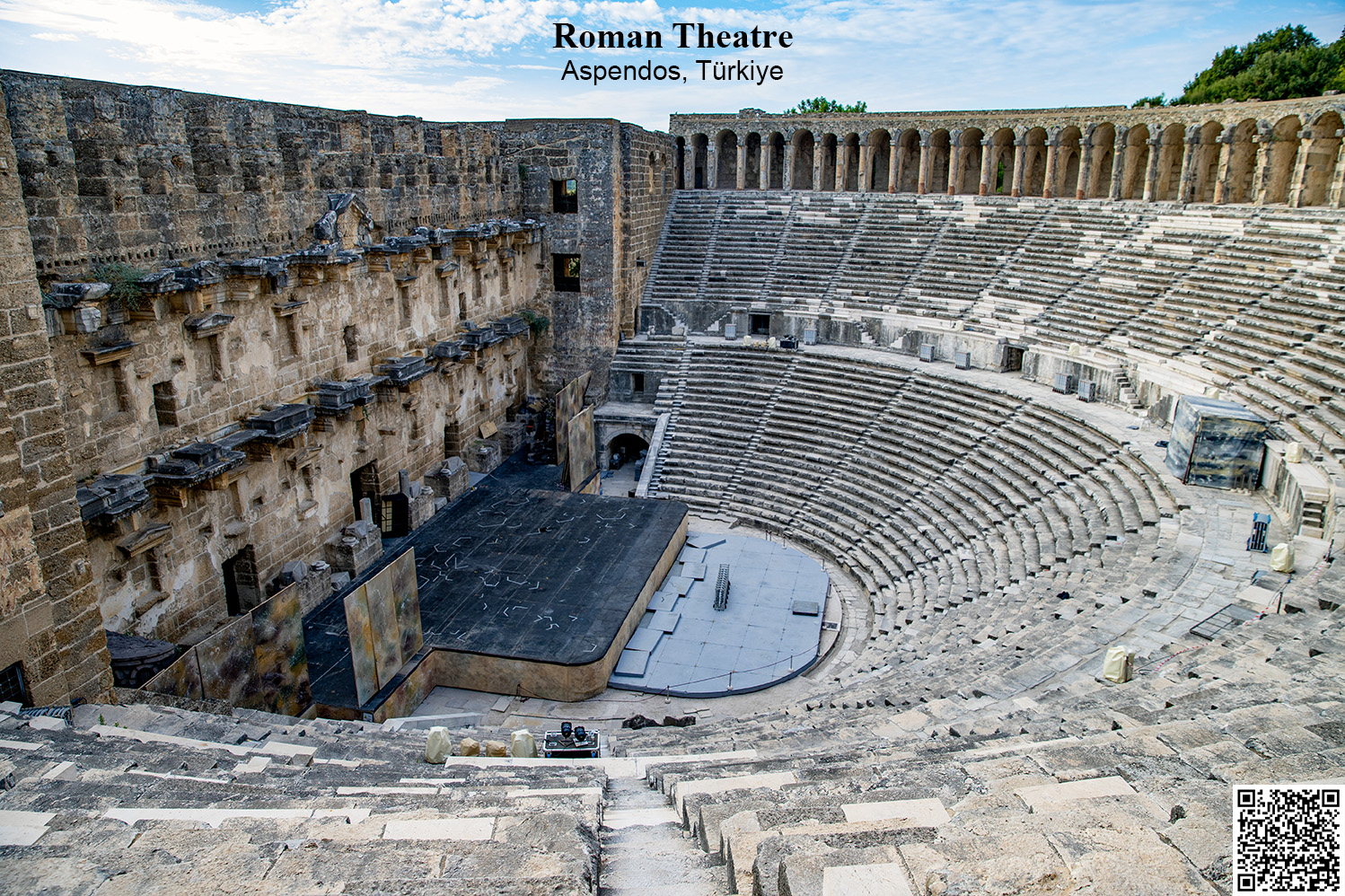
The forenoon of the following day was spent checking out the three famous ancient sites close to Antalya. We started off at Aspendos which houses the most intact ancient theatre on the planet. Originally built in the second century AD, the theatre has been restored to its near original state. It routinely houses operas and ballets. Our next stop was at the seaside Side. It is a sprawling ruins with the resort town of modern Side growing all around it. You are mostly walking past expensive waterfront restaurants and browsing over-priced clothes. It was easily the most crowded site of the trip. All these distractions would have been worth it had the top attraction, the Temple of Apollo right by the waves, wasn't closed for renovation. The third site, Perga, made up for Side's disappointment. Perga's monumental city gates and its impressive agora has stayed in our memory in spite of an overload of ancient ruins. Perga was the hometown of one Apollonius, the mathematician who was the first to figure out that a triangle, a circle, an ellipse, a parabola and a hyperbola are all various sections of a cone by a plane.
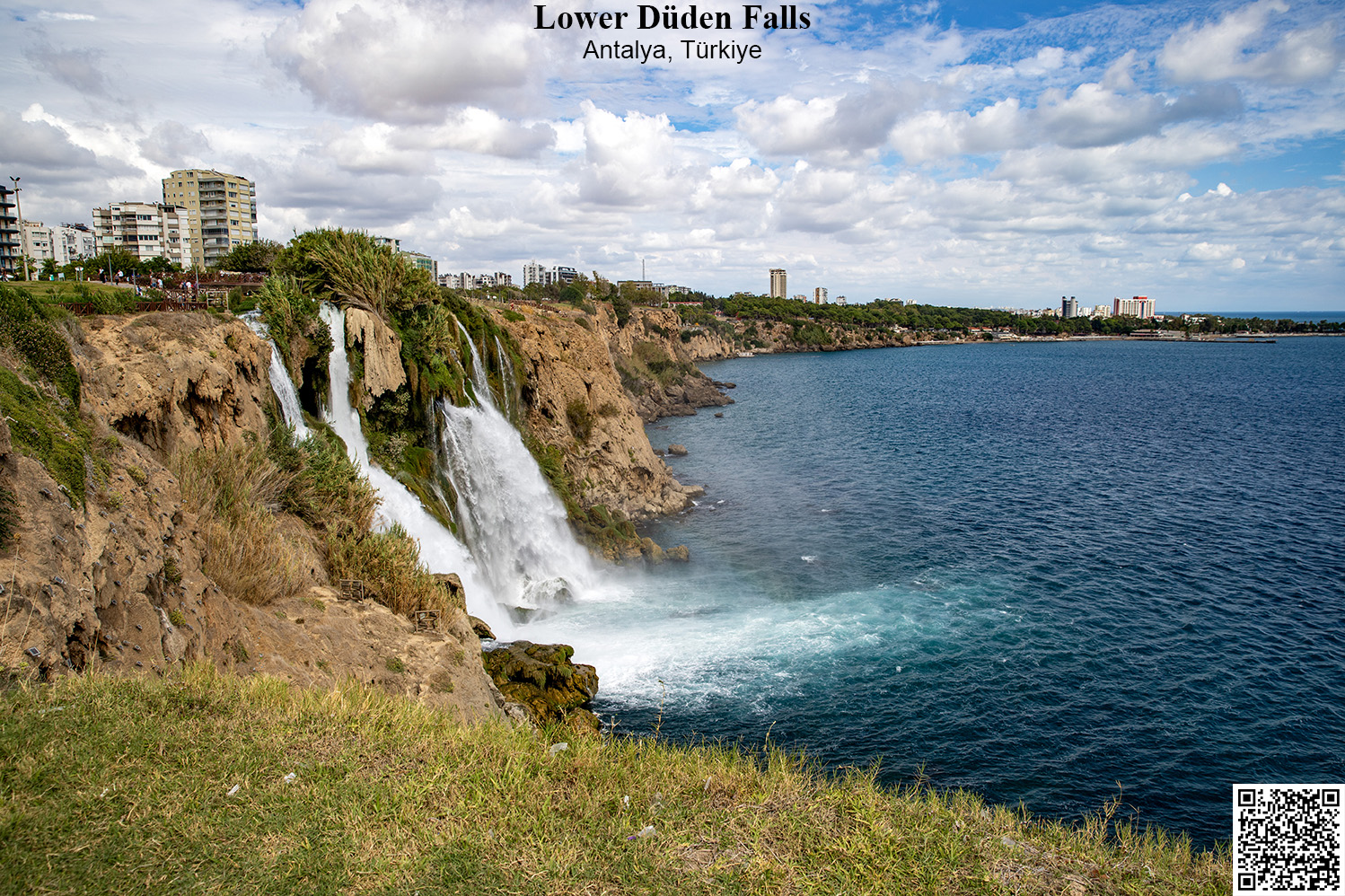
The afternoon was spent at checking the various sites of Antalya. Our only break from history came at the first: the Düden Falls. There are two falls with the same name and we visited the lower, where the Düden river plunges 40 ft into the Mediterranean Sea. It was our first experience watching a river plunge into a sea and it was truly memorable. History lessons started right afterwards. The name Antalya itself is a corruption of Attalia, a town founded by the Attalid dynasty who also founded the Kingdom of Pergamon. The top attraction in the city centre is the first century Hadrian's Gate built to commemorate the emperor's visit to this region. Nearby is the 13th century Yivli Minaret Mosque, built by the Seljuk sultan, Alaaddin Kaykubad I. The first Turks to enter Anatolia were the Seljuks and they slowly pushed out the Byzantine Empire setting up a Sultanate in its place. "Byzantine" is a name modern historians invented to describe the Eastern Roman Empire. People at that time were blissfully unaware of this moniker. The Byzantines called themselves and thought themselves as Romans. Hence, the Seljuks called their new Sultanate as the Sultanate of Rum i.e. the Roman Sultanate.
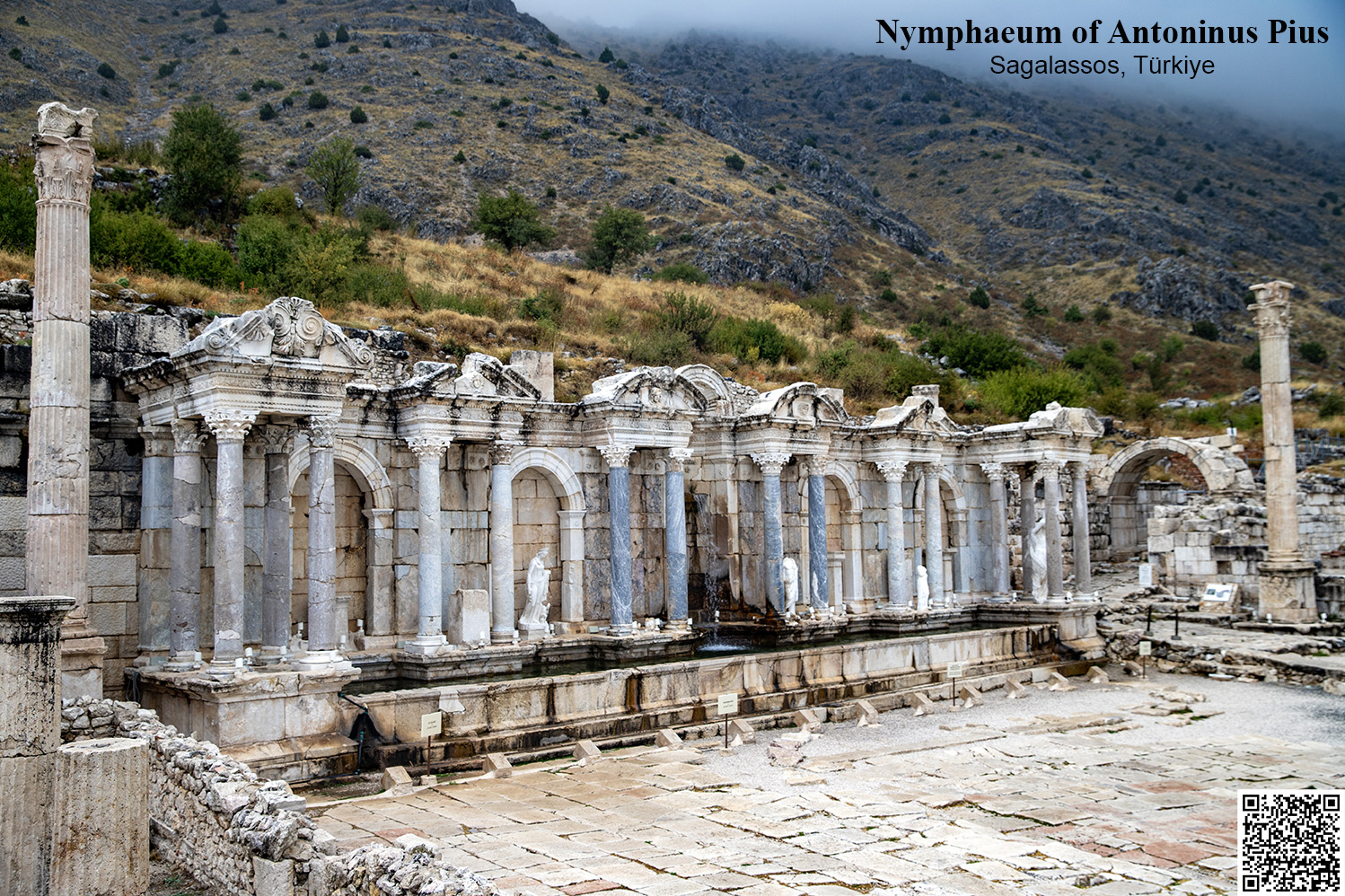
Ancient Pisidia was nestled between Lycia to the south and Lydia to the north. Its most important city was Sagalassos. Hittites controlled the city initially. Achaemenids took over in the 6th century BC. However, everything you see today dates from the later Hellenistic and Roman eras. The primary reason to make the expedition all the way to this hilltop town is to check out the best Nymphaeum (i.e. fountain) from antiquity. The second century Nymphaeum of Antoninus Pius has been splendidly restored and is currently in working condition.
Three hours west of Sagalassos is one of the highlights of Anatolian Greco-Roman sites: Aphrodisias. A cult dedicated to a fertility goddess existed here since at least the 8th century BC. In the 3rd century, following the Hellenisation of the region, the goddess was identified with Aphrodite and one of the biggest temple dedicated to the goddess was built here. As usual, only the resilient pillars survive from the original temple. However, the wider ruins has some well-restored gems like the stadium, best preserved in entire Anatolia, a theatre which is second only to the Aspendos, a majestic tetrapylon and a Sebastion, whose original reliefs can be found at the site museum.
Closer to the town of Denizli are the ruins of Laodicea. Apart from the usual colonnaded main street and a theatre, both of which are as common a sight in these ancient cities as pigeons are in modern city squares, Laodicea houses one of the Seven Churches of Apocalypse. The Book of Revelation is the last book written in the Bible. It was written so late that by the time it was penned, there are already working churches around the world. This book names seven such churches and all are found in western Anatolia and Laodicea houses the best preserved of the lot. Not a whole lot of superstructure survives, but the restored mosaics are quite fascinating.
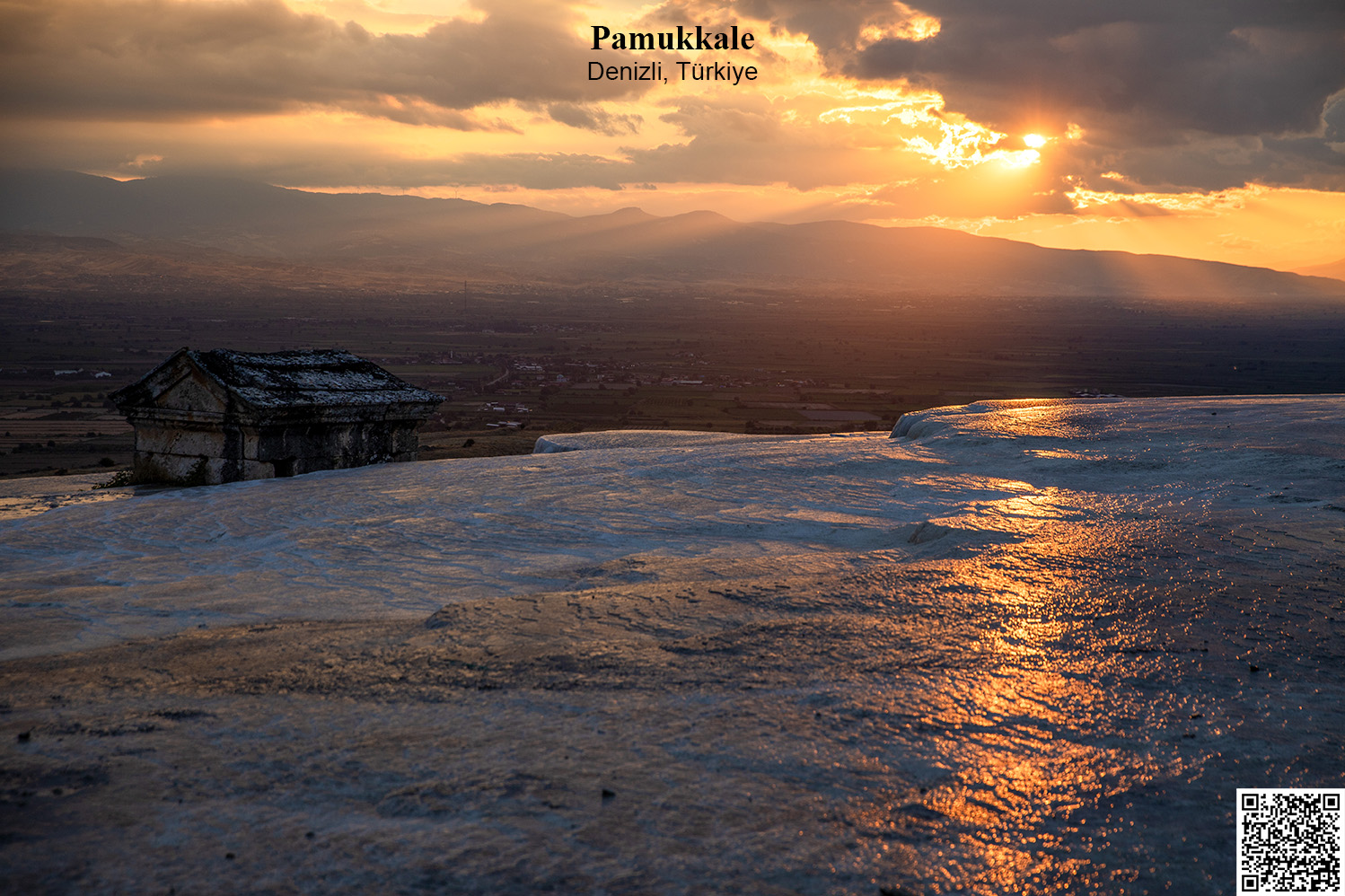
Our next stop was one of the top natural phenomena in the country, the travertine formations of Pamukkale. 'Pamuk' means 'cotton' and 'kale' means 'fort' in Turkish. Hence, the name translates to Cotton Fortress and the formation does indeed look like one, especially when lit up by the setting sun. Full disclosure: the absolute money shot parroted by the travel brochures (of steps of turquoise pools water flowing over the milky white formations) no longer exist. However, what is left, especially the experience of walking on the formations is still precious and worth visiting. People don't call this region Asia Minor for nothing. A Greco-Roman ruin cannot be far away. In fact, the ancient spa town of Hierapolis sits right on top of the Cotton Fortress and it is gorgeous during sunset. It is quiet and devoid of tourists and we spent our best evening of the trip wandering amongst its monuments.
The following day, the fifth day of sightseeing, was the only day of the trip devoid of a Greco-Roman ruin. Yes, it is possible to escape them in the heart of Anatolia. We first drove three and a half hours across the Anatolian plateau to Akşehir. Growing up in the India of the 80s, where Krishi Darshan was the top prime time show on TV, Tinkle Comics is all that we had to break out of the daily monotony. And one of the recurring heroes was Nasruddin Hodja. To us, he was as Indian as Birbal and Tenali Raman. In fact, his stories travelled up and down the Silk Road and he was a household name from Constantinople to Xi’an. Although he is generally considered mythical, many do believe he actually existed or at least based on a real person who lived in Akşehir in the 13th century. Nasrettin Hoca (as he is known in Turkey; 'hoca' means 'teacher' in Turkish) has his tomb here in the centre of the town. Re-reading some of our favourite stories displayed in the adjacent park brought back pleasant childhood memories.
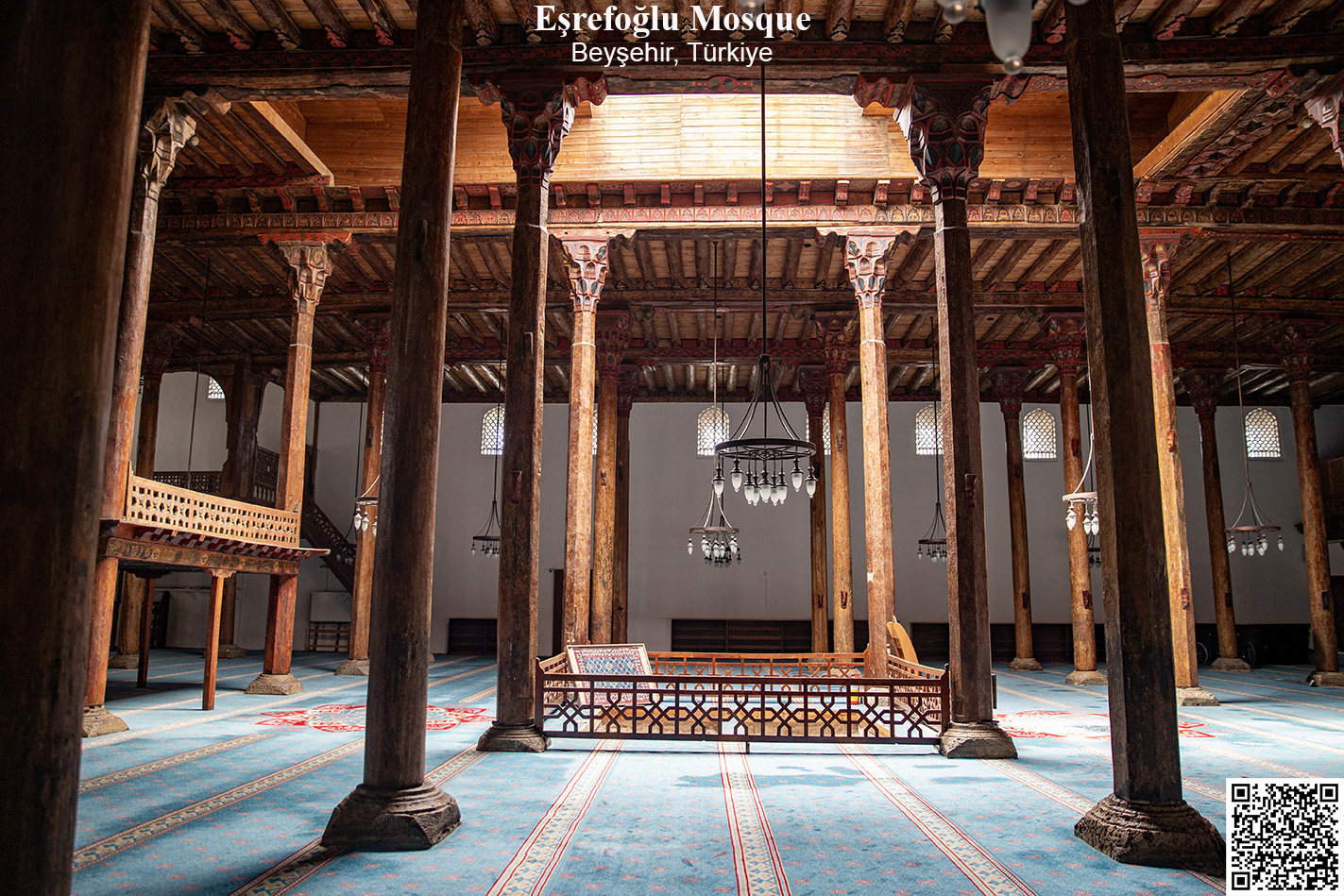
An hour and a half southeast of here is the Eşrefoğlu Mosque, one of the gems of Seljuk architecture. It was built towards the end of the 13th century, during the final days of the Sultanate when the local beys were beginning to establish semi-independent beyliks. Eshrefids were one such beylik and they constructed this mosque which is the biggest, best preserved wooden columned and roofed mosque in Islamic World. And we got here just in time to visit it before the mosque shut its door to the tourists for the afternoon namaz. A couple of hours more on the road brought us to Çatalhöyük, one of the oldest and biggest proto cities on the planet. Occupied during the transition from Neolithic to Chalcolithic, from about 7500 BC to 5600 BC, the city housed a population of about 7000. It was a city without a single street. Every house, except the ones on the edges, shared a common wall on all four sides with neighbouring houses. The entry to the house was from the roof and people walked around on rooftops. It was in Çatalhöyük that people discovered a 8000-year-old sculpture of a mother goddess who travelled on a pair of lions. Over time, this goddess became Κυβέλη in Greek and Cybele in English.
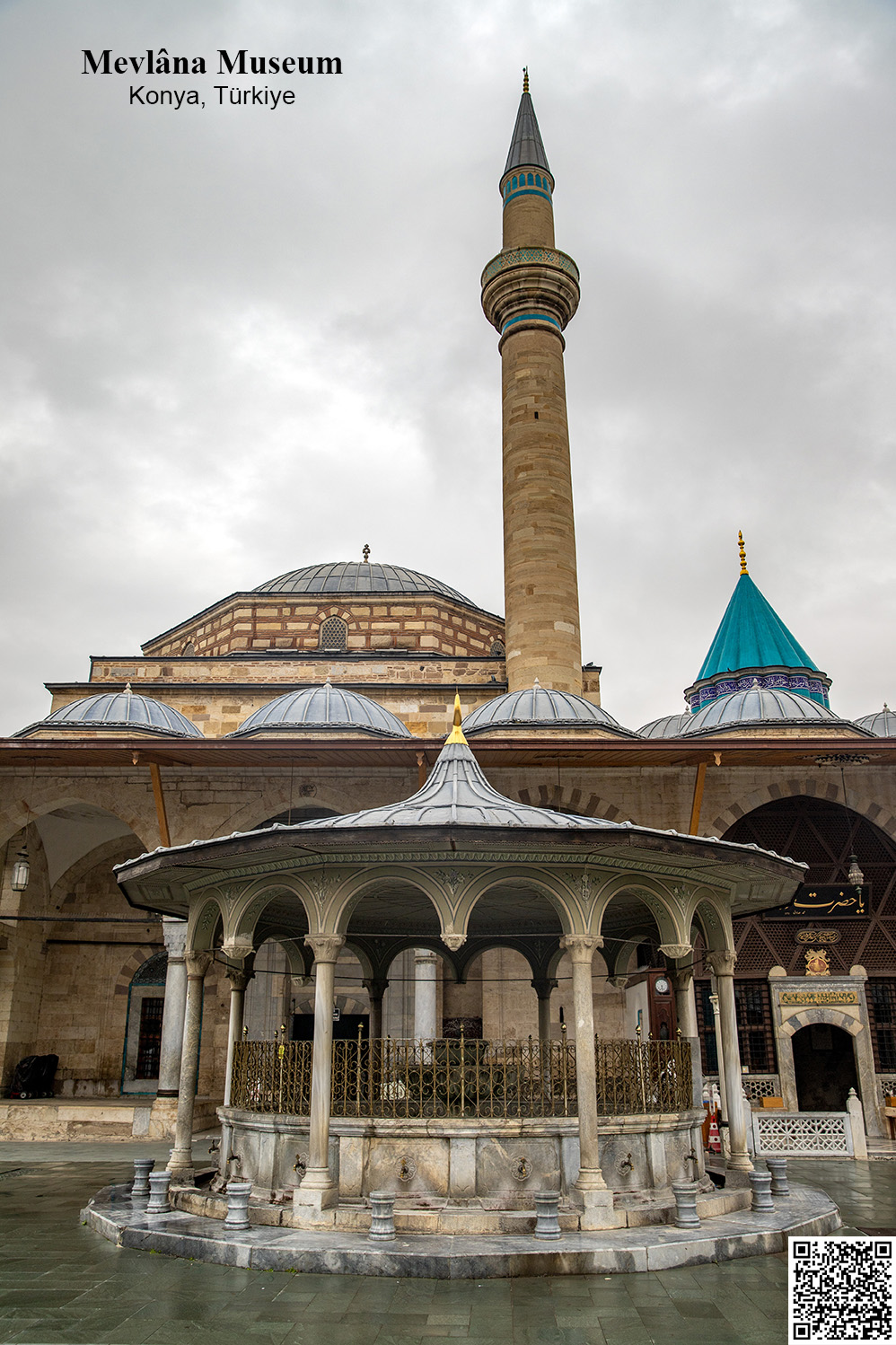
All that driving brought us to Konya, the capital of the Seljuk Sultanate of Rum and the following forenoon was spent checking out the sights of the ancient town. Turks were mostly nomadic and the Seljuks did not build grand palaces. They did have a summer residence nearby called the Kayqubadiyya Palace. Hardly anything remains of the actual palace. The most precious items from the palace, its fantastic ceramic tiles are displayed at the Tile Museum in the city centre. Close by is the Alâeddin Camii, a mosque started by Mesud I in 1155 and completed by Kaykubad I in 1235. The mosque has reused several Byzantine era columns and houses the tombs of many of the Seljuk Sultans including Mesud I and Kiliçarslan II. Seljuks aren't the main draw in Konya. That privilege goes to the 13th century Sufi mystic, Mevlana Celâleddin Rumi. Originally from Afghanistan, his family had to flee the Mongol invasion and they finally settled in Konya. It was Rumi who invented the concept of Whirling Dervishes. Visiting Mevlana's tomb was a moving experience, one of the highlights of our lives, let alone the trip.
A long three-and-a-half-hour drive brought us to the legendary Gordion, the capital of the ancient Phrygia. In the 8th century BC, this region was ruled by one King Midas. His legendary wealth gave rise to the famous myth of his Golden Touch. Phrygians used to bury their royalty in burial mounds and the largest of these mounds, Tumulus MM, probably belonged to Midas. And that tumulus contains the oldest wooden structure on the planet, a burial chamber dating back to 740 BC. It was also in Gordion where the famous Gordion Knot incident is said to have taken place. Legend has it that one Gordias became the king of Phrygia because he entered the city on an ox cart as predicted by some oracle. He tied the cart to a post and went about ruling the country. It was believed that whoever could untie the knot would rule all of Asia. Alexander came here in 332 BC and split open the knot with his sword.
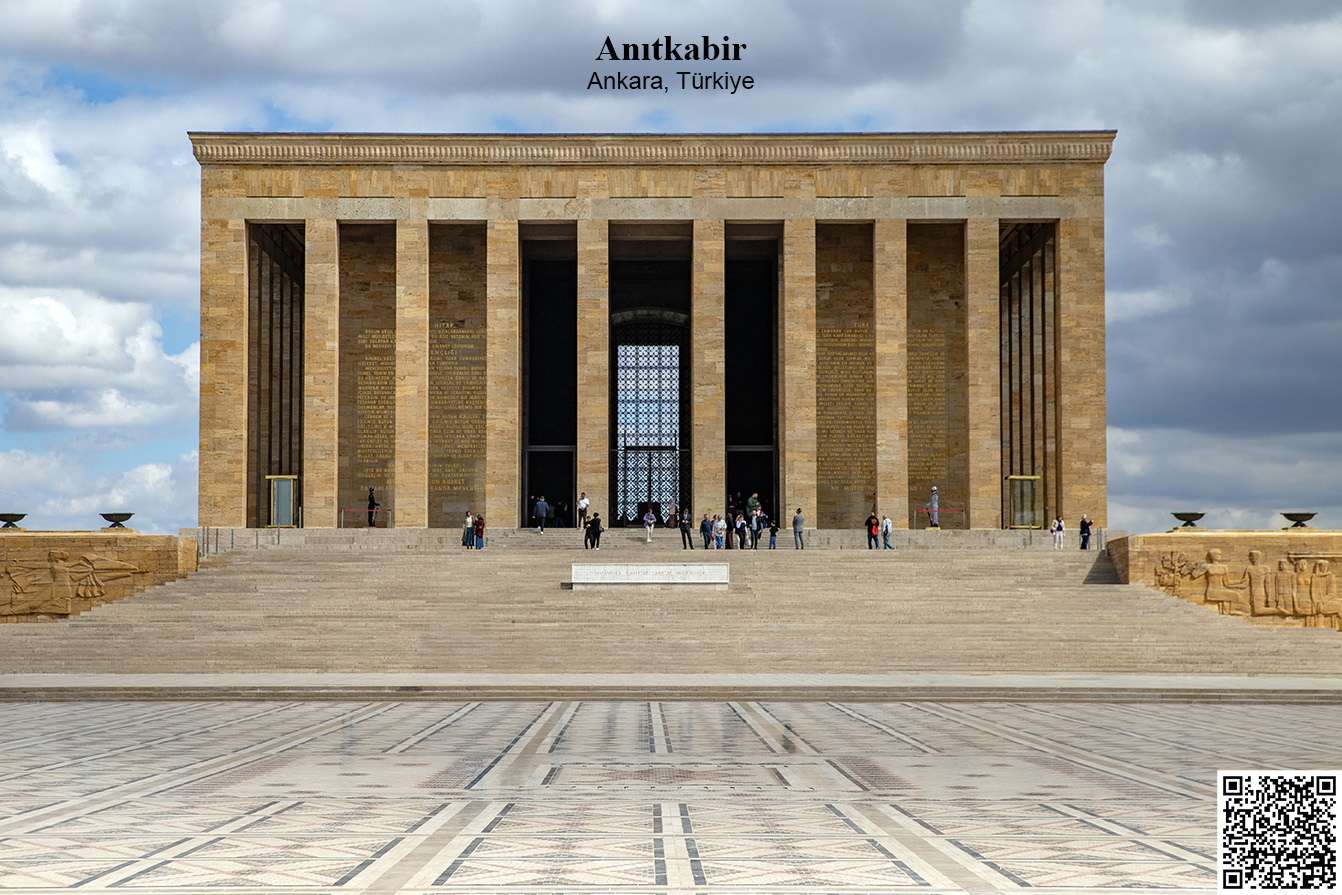
We are now on the final day of the trip, a leisurely day at Ankara would close out yet another hectic cum memorable trip. The top site in the capital is the Museum of Anatolian Civilisations, showcasing fabulous collection from across the various cultures and empires that had left their mark on the region. Up above the museum stands the Ankara Citadel, a fort dating back to the 8th century BC during the Phrygian era. The castle was expanded under the Roman, Byzantine, Seljuk, and Ottoman Empires. The third stop was at the Anıtkabir, the gigantic mausoleum of Mustafa Kemal Atatürk where we were lucky to catch the Changing of the Guard ceremony. We ended the day at the trio of museums dedicated to the 20th century Ankara: The first and the second parliamentary buildings and the Ankara Palas, built in the 1920s as a hotel for the members of the Grand National Assembly of Turkey.
As usual, let me conclude this travelogue with a note on the local food. Finding vegetarian food in Turkey was easier than many parts of India. And Turkish food had the right amount of spice and tanginess to suit our tastes. Turkish traditional breakfasts are predominantly vegetarian, well, as long as you consider eggs as vegetarian. The sumptuous breakfast for two that we had in Konya could have fed a famished army. Among the main dishes, the memorable ones were Menemen (egg based stew), Simit (Turkish bagels), Börek (a flaky pastry filled with vegetables or cheese), Lahmacun (lightly spiced flat bread), Pide (Turkish pizza), Kofte (breaded vegetable balls) and the ubiquitous Gözleme (Turkish parathas). We downed it all with copious amount of Ayran or Turkish çay served in the traditional ince belli bardak. No report on Turkish food is complete without mentioning the famous Lokums (Turkish delight). We raided a sweet shop at the beginning of the trip and had enough Lokums to last till the end. The other desserts worth mentioning would be Leblebi (chickpea) laddus, Sütlaç (rice pudding) and the Dondurmalı İrmik Helvası (sheera on top of ice cream) that we had in Antalya (see the vlog below for how it looks).
This turned out to be one of the best road trips of our lives. We covered most of western Anatolia in 10 days. The sheer range of historical eras that we got to witness was staggering. From Çatalhöyük to Anıtkabir, we had witnessed 9000 years of unbroken history. Anatolia has seen waves of migrations and invasions, and each one had left their mark and we are very grateful to have had the opportunity to see and experience them. We will surely return to Turkey. The East awaits us patiently since 9,500 BC.
|
Click here for more photos from the cities in Western Anatolia.
Click here for more photos from the Greco-Roman ruins of Anatolia.
|
|
|
|
|