Eastern Japan

Our first trip to Japan was two years ago, in the autumn of 2023. At that time we had visited the Kansai region (Kyoto, Nara, Osaka, Himeji), Miyajima, Shingu and Kanazawa. Since Japan was kind enough to give us a five year visa, it was time to go back and check out the rest of the country before our visa runs out. Although it was tempting to make this second trip in spring, coinciding with the annual Hanami, we decided to stick with autumn - the accommodation is cheaper, the skies clearer and the leaves hang on to the trees a tad longer than the flowers. The flight, however, dropped us four hours later than schedule which gave us just enough time to grab our JR passes and take the Hokuriku to our first destination, Nagano. The delay ensuring that the stuff planned for the afternoon wait for the following morning.
Thankfully, one of the stuff that got postponed is Zenkoji, a temple which opens at day break to mesmerising sutra chanting and we could start our day bright and early on a poitive note. If a temple's name ends in a "ji" it is an "Otera" or a Buddhist temple, "ji" being the honorific ending where we come from i.e. the land of the Buddha. Buddhism came to Japan in the mid-6th century A.D. when the Korean Kingdom of Baekje sent over a Buddha image. A conflict immediately broke out between the Mononobes who supported the traditional Shinto and the Sogas who were for the new religion. The Buddha image was lost in the mayhem. Legend has it that the image was eventually recovered and is now housed in Zenkoji. No one actually has seen this image in centuries and one has to just believe it exists somewhere inside the precincts of Zenkoji.

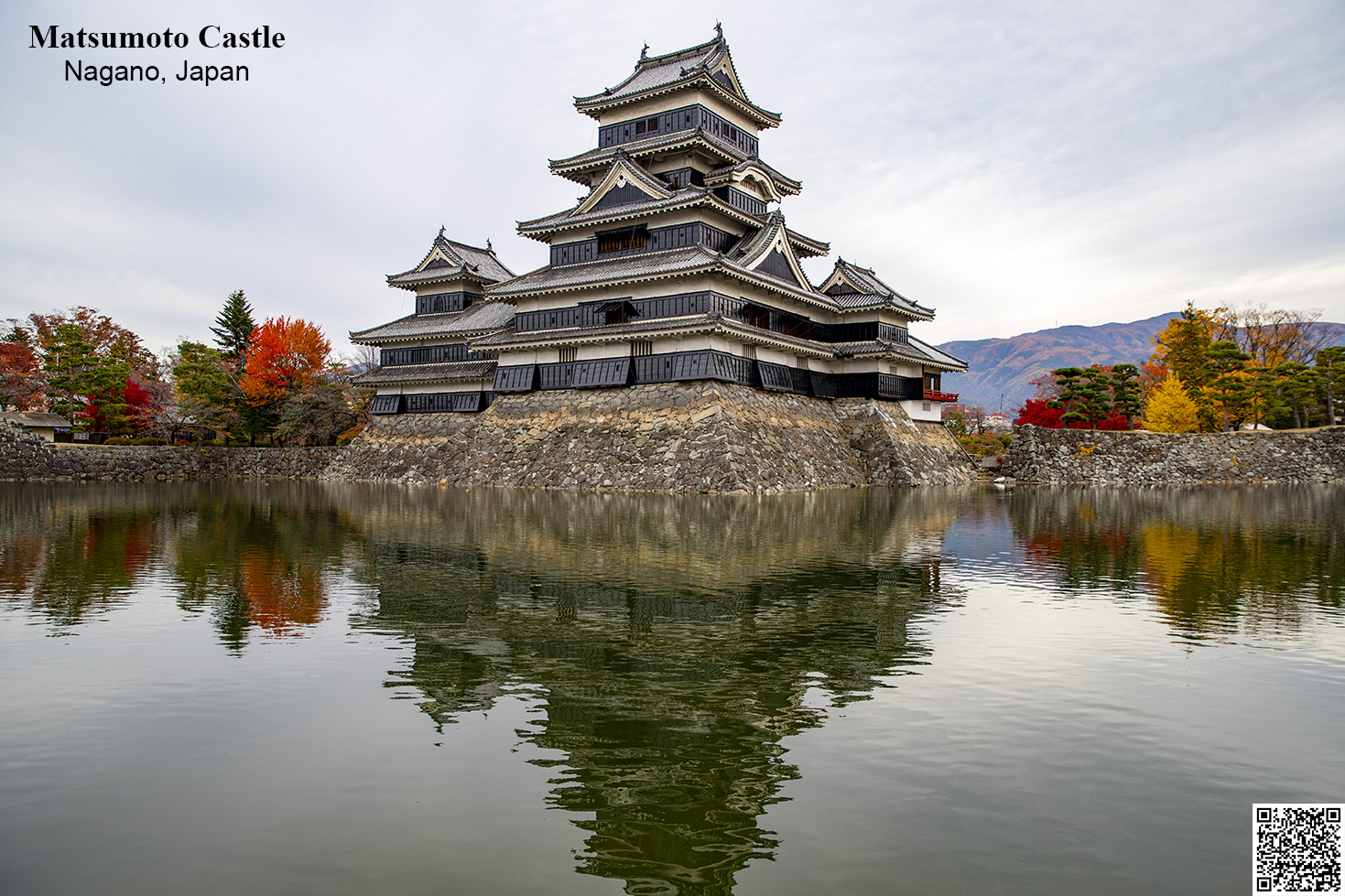
An hour and a half on a local brought us to Matsumoto, one of the top three castles of Japan. The other two being Himeji and Kumamoto. Just as Himeji is referred to as the White Heron Castle, thanks to its milky white exterior, Matsumoto is called the Crow Castle thanks to its greyish black exterior. Matsumoto was built in the 16th century, during the height of the Sengoku Jidai, the period when Japan was divided into several mutually warring states. This makes it one of the oldest castles in Japan and one of the dozen with the original keep. Nagano is also famous for its apples, autumn being its harvest season and we got to taste its signature apple juice while we were there. Four hours on a combination of Shinkansen and locals brought us to our second night stop: Nikko.
The Sengoku Jidai ended when the nation was unified progressively by three warlords: Oda Nobunaga, Toyotomi Hideyoshi and Tokugawa Ieasu. Ieasu and his descendants were able to rule Japan as Shoguns for over two and a half centuries. The tombs of the first few Tokugawa Shoguns are located in Nikko. The grandest tomb in Nikko is, of course, that of Ieasu himself. It was built in the early 17th century by Ieasu's descendants and houses the Yomeimon, the grandest gate in all of Japan. The other important sites in Nikko include Rinno-ji: a 8th century Buddhist shrine established by Shonin, Taiyu-in: the mausoleum of Iemitsu, the grandson of Ieyasu, and Futarasan Jinja: a 8th century Shinto shrine whose relocation here in 1617 gave the city its name (Futara and Nikko being alternative readings of the same kanji; welcome to Japanese).
Apart from these monuments, there's also Akechidaira, a viewpoint offering the panoramic view of the Kegon Falls, Lake Chuzenji, and Mount Nantai. This Akechidaira is what we should have given up to make up for the 4 lost hours. But we are committed travellers. We decided to forgo lunch, risk the relay of several incomprehensible bus transfers and a rickety old rope-way to the viewpoint and sprinted the last couple of kilometers (with luggage in tow) to make it our 3 pm train with 25 seconds to spare. And yes, the 40 seconds that we got to spend at the viewpoint was worth all that breathlessness.
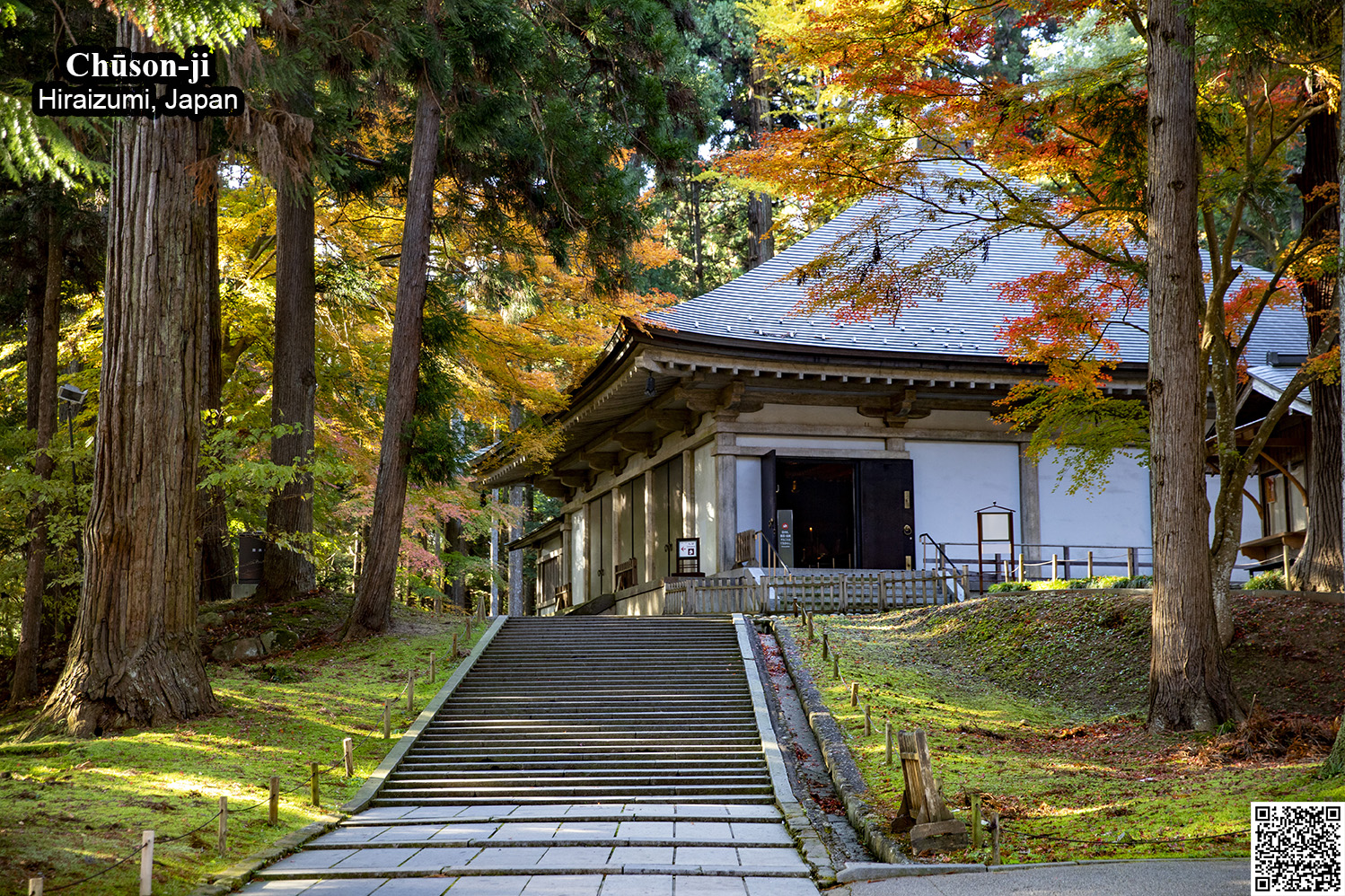
Hiraizumi is where we spent the night. In the 7th century, this was the border that separated Japan from the wild Emishi tribe (the literates got to call all others as wild barbarians). In 801 A.D., one Sakanoue no Tamuramaro subdued the Emishi and brought them under the control of Kyoto. For this achievement, he was given the title of Shogun, the first on in recorded history to get that title. Overtime Hiraizumi was dominated by the Northen branch of the Fujiwaras and they built the city to rival Kyoto in grandeur. In 1189, the reigning Shogun was Minamoto no Yoritomo and he invaded Hiraizumi and left it in ruins. Very little of the earlier grandeur survived the destruction. Two examples of the "very little" are the stunning Konjiki-do of Chuson-ji and Takkoku no Iwaya Bishamondo, a Shinto shrine in a dramatic cliffside location. These two and the fantastic gardens at Motsu-ji (nothing of the original structure has survived) would be enough to make the trek (if you can call sitting still in a Shinkansen as "trek") up north worth the effort. However, this was high autumn and with the momijis exploding in bright red colours from every angle, this day ended up being our most magical in Japan across both the trips.

Another array of Shinkansens brought us to Kamakura, the capital of the Shogunate of Yoritomo, the destroyer of Hiraizumi. For most part of its history, Japanese emperor was a puppet controlled by a powerful family or a Shogun. The first were the Sogas, the Fujiwaras and the Tairas. Minamotos defeated the Tairas in the 12th century and took over as the new Shoguns. They were the first who decided to run the show remotely setting shop at Kamakura. Kamakura, hence, has enough monuments and temples befitting a Shogunate. The top two sites that everyone visits are the Kotoku-in with its 13 m tall 93 ton bronze Buddha and the Tsurugaoka Hachimangu, one of the most important Shinto shrines of Japan. Since we had a whole day to spare, we could also check out the Five Great Zen Temples of Kamakura and the Hase-dera Temple which houses one of the largest wooden statues in Japan, the 9 m tall Juichimen Kannon statue. In between all these temple hopping, we also managed to taste traditional Kamakura cuisine. Outside of Kencho-ji, the most important of the Five Zens of Kamakura, there is a restaurant dishing out Kenchinjiru, a traditional soup invented right here inside the temple.
This much crisscrossing of Japan in five days is what is needed to justify the steep cost of the 7-day JR pass. We had one more day left on the pass and we decided to head to Hakone to maximise our return. Hakone, a notable spa town located within the volcanically active Fuji-Hakone-Izu National Park is a popular day-trip destination from Tokyo. Getting around Hakone is slow and you would end up spending most of your time on slow winding roads and switch-backing trains. So, a overnight stay is recommended. Ours, however, was a day trip. Our first stop was at the Hakone Jijna, a mid-8th century Shinto shrine which was moved here in 1667 - where we spent an hour queueing to take the perfect Instagram shot of the famous Floating Torii. If we don't go viral, I am blaming the other 30,000 Instagrammers, most of whom were half our age, in the queue who took and posted the exact same shot. The torii is "floating" (read: anchored to the shore) of Lake Ashi. Traversing that on a Pirate Ship is the next most popular thing to do in Hakone. The third most popular activity, taking the cable car up to the Owakudani Volcanic Valley was cancelled, thanks to the wind which rendered the cable-car inoperational. That gave us a chance to check out the Hakone Museum of Art. Yes, it is a museum, but it is more famous for the adjacent gardens which was spectacular in autumn, the foliage being as good as any we had seen in our lives. After the final must-do - strolling through the quixotic sculpture garden of the Hakone Open-air Museum, we headed back to our final destination of the trip: Tokyo. On the way, we did make a couple of pitstops, first at Yokohama and then at Odaiba, both famous for its dramatic views of the bays, especially after dark. The Minatomirai in Yokohama and the Rainbow Bridge across the Tokyo Bay in Odaiba were picture perfect. Sadly, I just did not have the equipment (read: talent) to take perfect pictures.

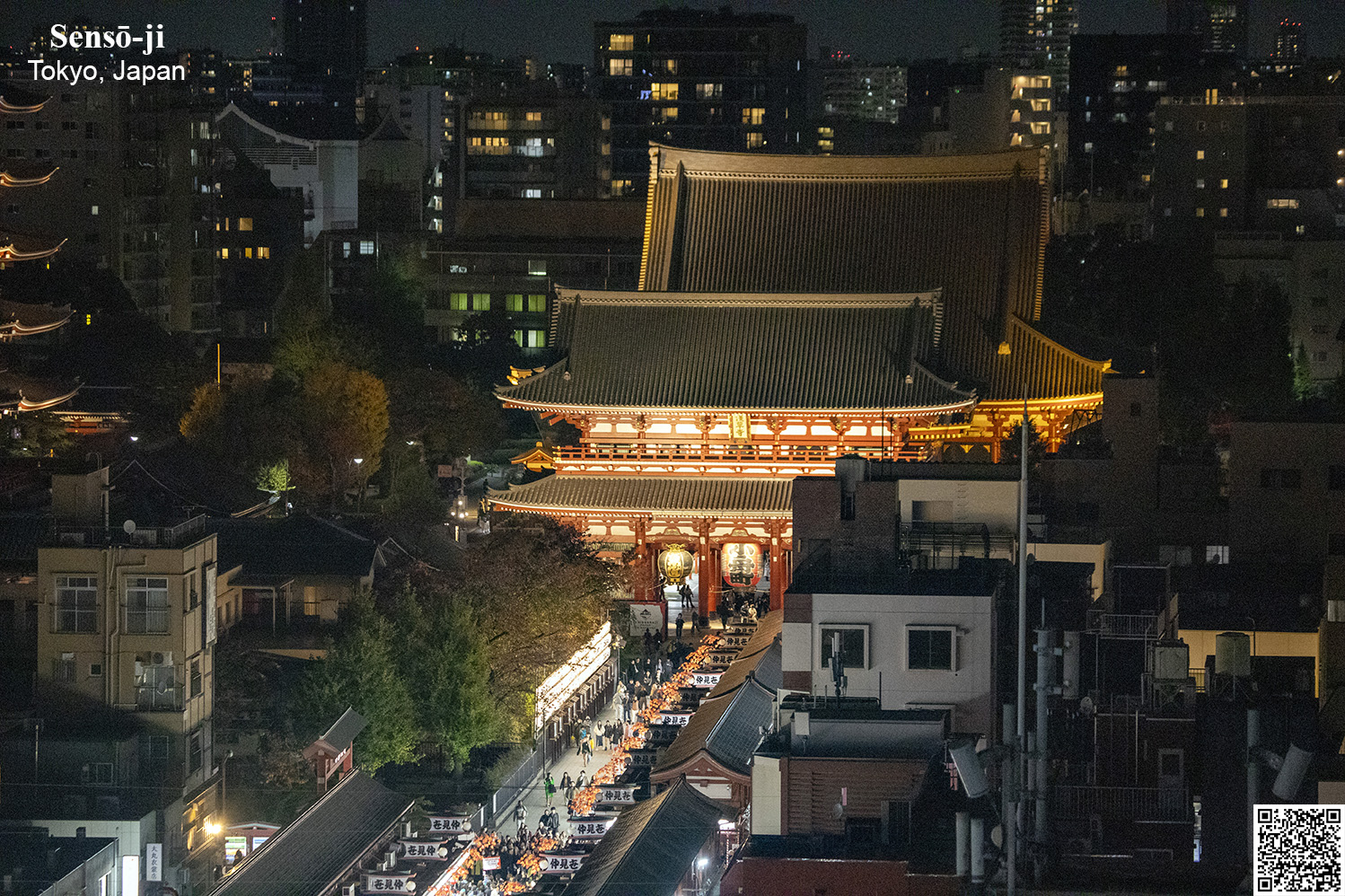
We are now finally in Tokyo, one of the greatest cities on the planet and we started our sightseeing at its oldest established temple, Sensoji. In 628 A.D., a couple of fishermen fished out a Kannon statue from the Sumida River and this Senso-ji was built to house it. This is legend, of course, and no one has actually seen this mysterious Kannon statue. Historically, the original temple dates to about the 9th century. The temple was completely pulverised by the allied bombings of the Second World War and what you see today is the 1960s reconstruction. Sensoji complex also houses the Asakusa Jinja dedicated to the two fishermen who started it all. We jumped from an Otera to a Jinja, to the Meiji Jingu to be precise. The Tokugawa Shogunate closed Japan down for two and a half centuries and ruled it with an iron fist. In the 1850s, Mathew Perry (this guy and not this guy) showed up with his Black Ships and forced Japan to open its markets. This utter humiliation was utilised by the emperor Meiji to kick out the Tokugawas and reinstate the power of the Emperor. This Meiji Restoration is one of the seminal moments of Japanese history. Within half a century Japan turned things around and defeated Russia in the Ruso-Japanese war, the first time in history an Asian power has defeated the West. Meiji became an gigantic hero after that, big enough to be deified after death and this Meiji Jingu us where his spirit is worshipped.
The rest of the morning was spent at the Shinjuku Goen and climbing a couple of tall buildings for the dizzying views of the city. The garden wasn't interesting, save for the array of trees at the French Formal Garden section. The first of the buildings - Tokyo Metropolitan Government Building - was eminently boring despite it being our first and the second building, Roppongi Hills Observatory gave spectacular views of the Tokyo Tower. Afternoon was spent at the Ueno Park checking out its various temples, pick of which was the Tosho-gu dedicated to the Tokugawas. Normally, our city days end in early evening. But this is Tokyo where the night bling outshines daylight. So we were forced to head out in the evenings as well. This evening, when we no longer had the strength to Metro, we took taxis to visit the tallest two towers of the city. The first, the Tokyo Tower, built in 1958 as a copy of the Eiffel, offered great views of the surrounding skyscrapers while the second, the Skytree, the third tallest structure on the planer (after the Burj and the Merdeka) offered sweeping views across the entire city.

All the days in Tokyo started at a temple as those are the only ones open at dawn. Our second day started at the controversial Yasukuni Jinja. It was created by Emperor Meiji to commemorate those who died in the Boshin War, the civil war that kicked out the Tokugawas and installed him as the ruler. Over time the shrine's purpose was expanded to cover the subsequent wars as well. What is so controversial about it? Well, one of those subsequent wars was the Second World War and the commemorated veterans include those convicted of serious crimes in China and Korea. A short taxi ride away is the Tokyo International Forum Building. Designed by architect Rafael Viñoly and completed in 1996, it is one of the great architectural marvels of the 20th century. Four gardens rounded up our day: the underwhelming Hibiya, the East Gardens of the Imperial Palace which offered good views of the palace complex, the pretty little garden attached to the Nezu Museum and downright spectacular Koishikawa Koraku-en. Do note that what is underwhelming in autumn are the cynosures in spring and spectacular ones are mainly so only during the short autumn foliage season. Yes, nothing is permanent, a Buddhist message that is by now tattooed in us after so many Otera visits. In the evening, we first stopped by Akihabara Electric Town. After adding one more digital footprint of the most photographed corner of Tokyo, we headed to the Shibuya Sky. That building overlooks the famous Shibuya Crossing, deemed to be the busiest crossing on the planet. To see the ebb and flow of pedestrians and vehicles from the heavens, you need to book a slot in the Shibuya Sky weeks in advance. Yes, there are places in the world where people pay to watch traffic.
The opening series of temples on the final day were the Nezu, the Hie and the Zojo-ji. Established in 1705, Nezu is most famous for its Azalea blooms in spring. Hie, located on a hilltop, has a long torii tunnel, second only to the famed Fushimi. Zojo-ji offers the best ground level views of the Tokyo Tower, houses the graves of the later Tokugawas and an array of pretty Jizo statues. After an underwhelming stop at the Hama-rikyu gardens which made us miss the Goma Fire ritual at the Fukagawa Fudo Do, we finally ended the day at the Sumida Hokusai Museum. The museum is dedicated to Katsushika Hokusai, the most famous painter from the Edo period. Although we could only see a copy of his famous Wave of Kanagawa, his ukiyo-e paintings of the courtesans were absolutely breathtaking. The evening bling stops were Sunshine City of Ikebukuro and the Kabukicho area of Shinjuku. Our trip ended with us watching the famous 3-D cat of Shinjuku knock things off the screen.
Among the 30-odd countries we have visited so far, Japan was the hardest to bid a 'sayonara'. With the metronomic regularity of her trains, the simplicity of her meals, the serenity of her architecture, the discipline of her people who queue to even get on escalators, the brilliant autumn foliage and a culture that spans pre-dawn sutra chanting to late night Maid Cafes, Japan well and truly stole our hearts. We have to now come to terms with the difficult fact that Japan is in our past and not our future.
|
|
|
|